MHMS FIJI
COVID-19 Update 07-03-2022

COVID-19 Situation Update

Monday 07th March
Transmission Update:

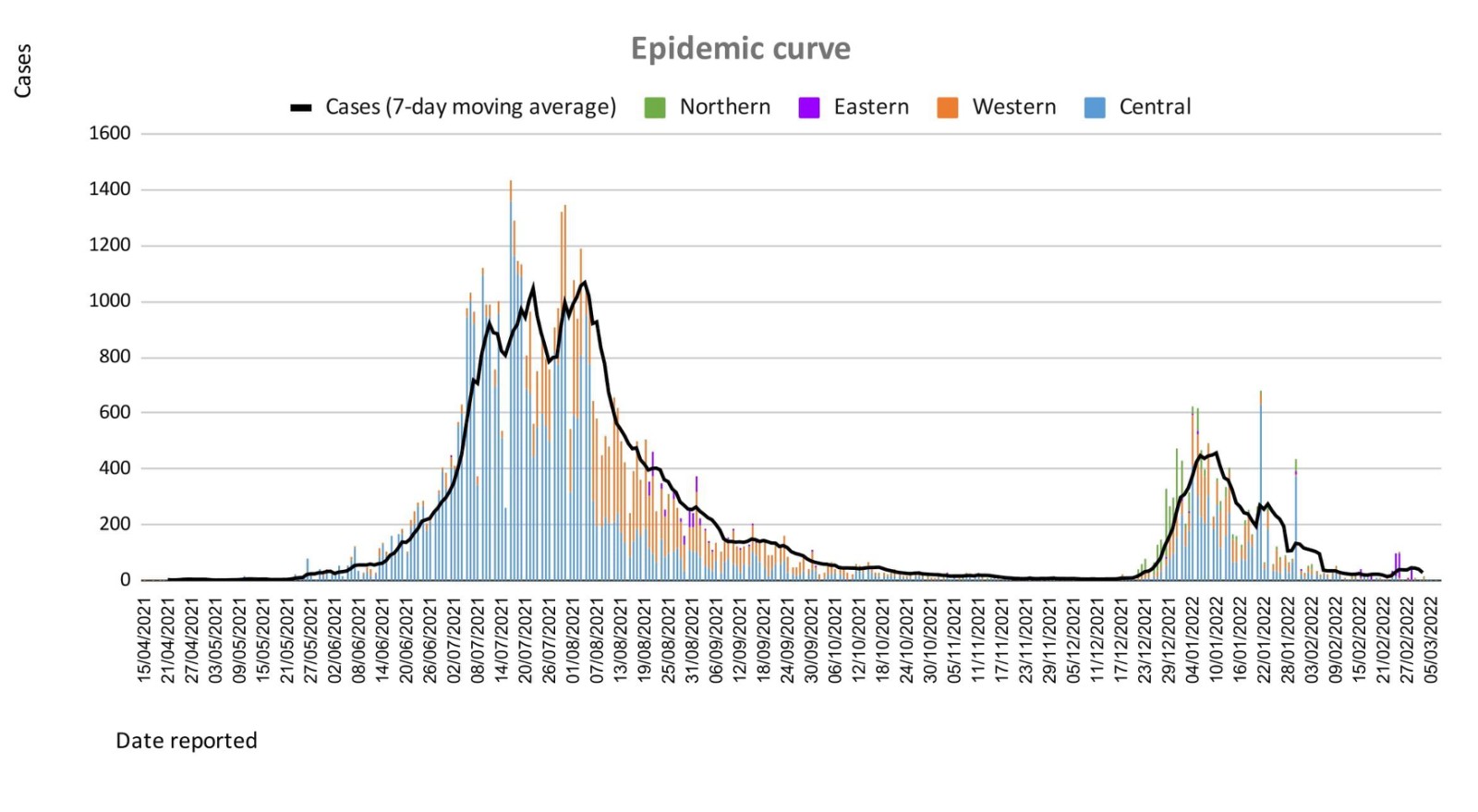
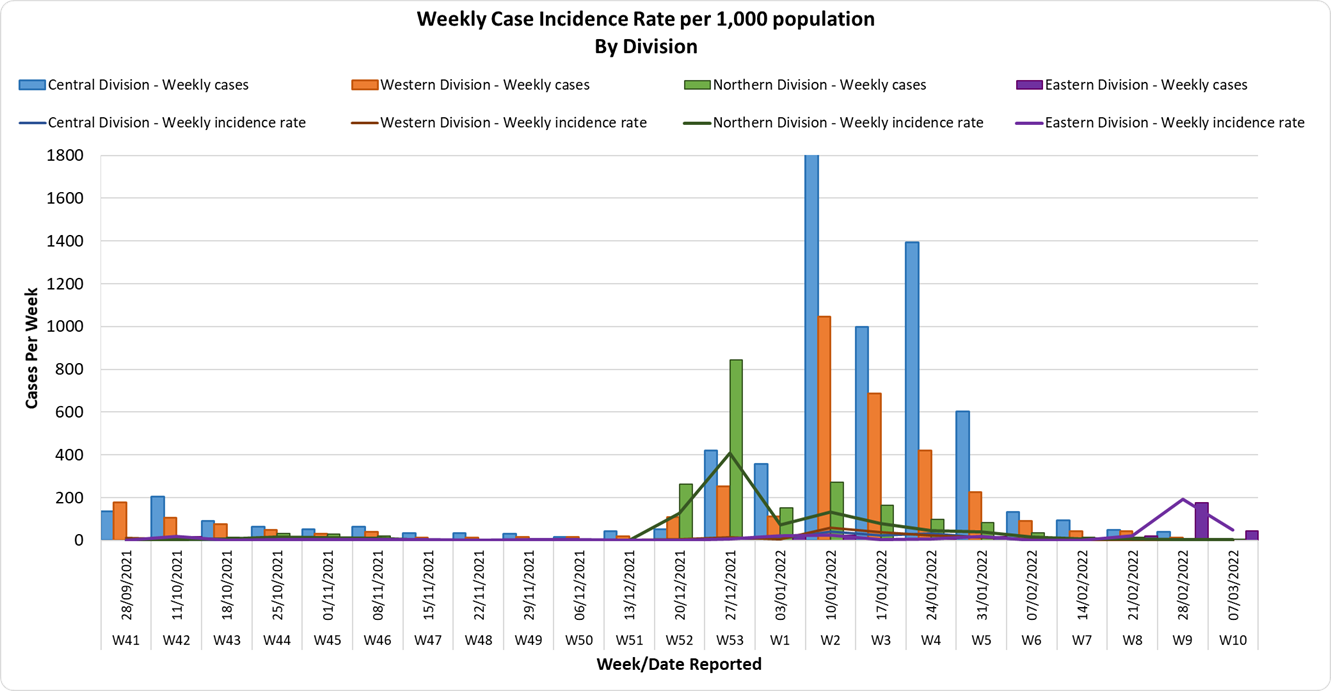
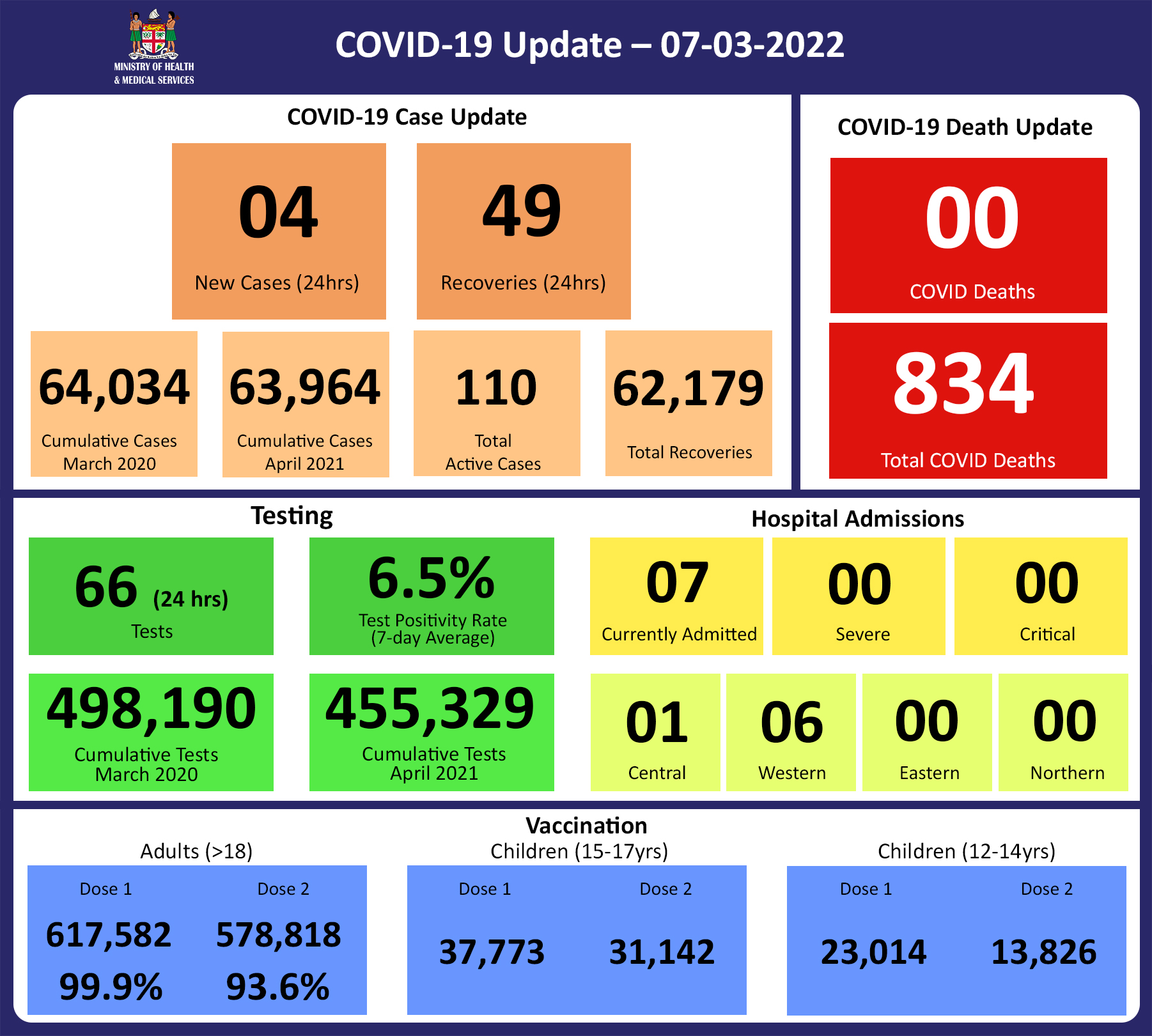
Since the last update, we have recorded 15 new cases of which 6 new cases were recorded on 05/03/2022; 5 new cases were recorded on 06/03/2022 and 4 new cases in the last 24 hours ending at 8 am this morning.

Of the 15 cases recorded, 10 cases were recorded in the Central Division; 4 cases were recorded in the Western Division, 1 case was recorded in the Northern Division, and nil case was recorded in the Eastern Division.

Overall, there have been 63,964 cases of COVID-19 recorded in Fiji, with 68% of the cases from the Central Division, 27% of the cases from the Western Division, 2% of the cases from the Eastern Division, and 3% from the Northern Division.

The national 7-day rolling average of cases as of 3rd March is 28 daily cases.

Deaths:
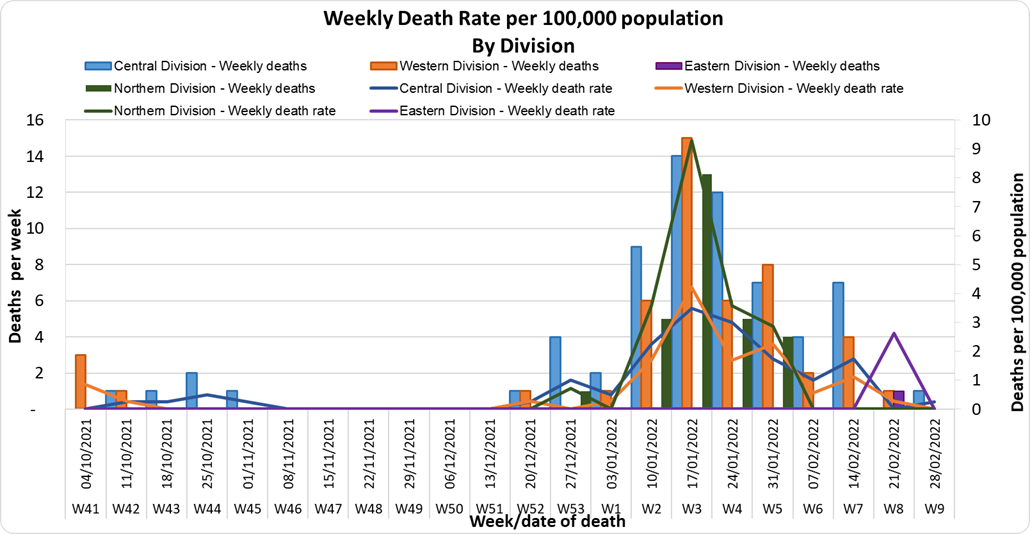
The curves depict daily COVID-19 deaths by division since May 2021. It indicates a surge from December-end 2021, which peaks by mid-January 2022. The 3rd COVID 19 wave is considered to have started around mid to late December 2021. (Note: Death notifications from within the last two weeks are still being received, therefore the graphs may alter slightly upon reporting).

Analysis of Deaths in the Third Wave 

Table 1: Death rates by Division

Division Total COVID Deaths Deaths per 100,000
Central 61 15.4
Western 44 12.3
Northern 28 20.0
Eastern 5 13.0

An analysis of the 138 deaths recorded in the third wave shows that, while the Central Division has the highest absolute number of deaths, the Northern Division has the highest rate of death when adjusted for population. 

Table 2: Deaths by Age Group

Age Group Total Deaths Deaths per 100,000
population
0 – 9 6 3.3
10-19 2 1.3
20-29 3 2.1
30-39 4 2.9
40-49 6 5.4
50-59 18 19.8
60-69 27 51.9
70-79 42 187.5
80-89 23 408.8
90-99 5 961.5

For the 138 deaths in the third wave, the death rate adjusted per 100,000 population, has been highest in age groups 50 and onwards. There were 8 deaths below the age of 19 years, 7 out of the 8 children had significant pre-existing medical conditions, and one child had no known underlying medical condition.

Table 3: Deaths by Vaccination Status

Age Cohort Total COVID deaths Total Vaccinated/ Unvaccinated Deaths per 100,000 Vaccinated Population Deaths per 100,000 Unvaccinated Population
>18 129 55/75 9.4 175.4
15-17 1 0/1 0 6.6
12-14 1 0/1 0 2.5

Out of 138 COVID -19 deaths reported in the third wave, six (6) deaths were in the population not eligible for vaccination (under age 12). An analysis of the 133 deaths in the vaccine-eligible population reflected, that when adjusted per 100,000 population, for fully vaccinated (received 2 doses) and unvaccinated/not fully vaccinated (received 0 doses or only 1 dose) adults in Fiji, a death rate of 9.6 per 100,000 population for fully vaccinated adults and 190.5 for unvaccinated adults was exhibited. This means that unvaccinated adults in Fiji have been dying at a rate 18.5 times higher than fully vaccinated adults during the current COVID-19 wave. Individuals of the 12-17 age group who died were not vaccinated. There have been no COVID-19 deaths in individuals who received a booster (3rd dose) of the vaccine.

New deaths to report

There is no new COVID-19 death to report.

There have been a total of 834 deaths due to COVID-19 in Fiji. Please note that due to the time required by clinical teams to investigate, classify and report deaths, a 4-day interval is given to calculate the 7 days rolling average of deaths, based on the date of death, to help ensure the data collected is complete before the average is reported. Therefore, as of March 3rd, 2022, the national 7 days rolling average for COVID-19 deaths per day is 0.1, with a case fatality rate of 1.29%.

We have recorded 909 COVID-19 positive patients who died from other serious medical conditions unrelated to COVID-19; their doctors determined that COVID-19 did not contribute to their deaths, therefore these are not classified as COVID-19 deaths.

Hospitalization:

There is a sustained downward trend in daily hospitalizations. Using the WHO clinical severity classification, a greater percentage, 71% (n=5) of the admissions of COVID-19 positive patients are categorised as asymptomatic and mild, 29% (n=2) is categorised as moderate and nil cases in the severe and critical category. Anyone admitted to the hospital is tested before admission, therefore, a significant number of people are admitted to the hospital for non-covid health conditions, but incidentally, test positive due to the high amount of transmission in the community. The number of people being admitted because of COVID-19 remains low.

Testing:

66 tests have been reported for March 6th, 2022. Total cumulative tests since 2020 are 498,190 tests. The 7-day daily test average is 162 tests per day or 0.2 tests per 1,000 population.

The national 7-day average daily test positivity is 6.5%. The positivity rate is an indication of widespread community transmission.

Public Advisory:

LTDD Response update

As previously mentioned, the recent weather has resulted in conditions conducive to outbreaks of leptospirosis, typhoid, and dengue fever, which are climate-sensitive diseases endemic to Fiji. We are also aware of the recent weather reports predicting increasing rainfall over the next few days, and as such the medical advice we provide needs to be followed, while we continue to mount our public health and clinical response. We have especially noted increasing leptospirosis cases, hospitalisations, and deaths following similar weather events. Please heed our advice to protect yourselves and your loved ones.

In late February Rakiraki Subdivision had reported a total of 35 admissions of LTDD cases of which 13 cases were severe enough to warrant transfer to Lautoka Hospital. There were 4 deaths due to Leptospirosis and 1 death due to Typhoid. Poor health-seeking behaviour was a significant factor

The FEMAT team was deployed to look after the hospital while the Sub-divisional teams carried out outreach duties. Four teams consisting of one medical officer, one nurse, and one health inspector were deployed to different medical areas.  Their objectives were to;

  1. Reach out to all the villages in Ra SD within 2 weeks.
  2. Actively look for and treat patients with suspected LTDD.
  3.  Create awareness for all the villages in Ra SD on LTDDs.

In the first 5 days, they had seen a total of 730 outpatients of which 71 were suspected Leptospirosis, 2 were suspected Typhoid, 110 were Acute Respiratory Infections. Six cases had to be retrieved with moderate illness.  None of the cases went on to develop severe disease

The main impact of the FEMAT deployment is that we have had a bigger increase in the suspected line list for LTDD, however, home medical treatment and follow-up capability resulted in only 6 admissions and no deaths within a very short time. This impact was experienced despite ongoing weather conditions. Also while the number of cases continues to occur at outbreak levels in the Rakiraki Medical Area, the exercise facilitated early treatment which resulted in decreased severity and duration of the disease in those put on the line list. The active pursuit of cases, however, cannot be sustained over a long time, and as such community engagement to promote better health-seeking behaviour remains the priority means of facilitating early treatment and support.

Leptospirosis

All individuals susceptible to the infection, however, cases remain predominantly higher in ages 10-39-years more in males than females, and in people of the i-Taukei ethnicity.

Prevention

The leptospirosis bacteria is spread to humans through the urine of infected animals, such as cows, pigs, rats, and dogs. To reduce your individual risk, it is important to understand that exposure to animals, soil, mud, and floodwaters during work or recreational activities increases your risk of infection.

Important prevention measures include wearing full covered footwear at all times when going outdoors, avoiding wading or swimming in flooded waters, using clean fresh water to wash up after exposure to muddy waters, and keeping all food and drinks covered and away from rats. For workplaces, practice good personal hygiene at all times, cover cuts and wounds well, and use protective equipment, especially footwear when in flooded and/or muddy areas.

We are also urging all parents and guardians to prevent children from playing in the mud or swimming in flooded rivers or creeks, and ensure that they wear shoes when outside.

Symptoms and treatment

Early treatment can decrease the severity and duration of the disease. Please seek medical care if you have recently had contact with floodwaters, mud, or animals, and develop the following symptoms: fever, muscle pain, headache. You may also have red eyes, loss of appetite, nausea/vomiting, dizziness, or feel weak.

Leptospirosis can be treated with appropriate antibiotic medications prescribed by a doctor if treatment is sought early. Danger signs for severe leptospirosis include shortness of breath, coughing blood, chest pain, yellow eyes/skin (jaundice), signs of bleeding (including unexplained bruising), decreased or increased urination, difficulty staying awake. Severe leptospirosis is life-threatening, and anyone with these symptoms must be taken to the hospital immediately.

Response

Awareness messaging continues to be distributed to the public through radio, television, print, and social media, focusing on prevention and early healthcare seeking for suspected cases. And our clinicians have had access to continuing medical education sessions remotely, or in person, by our specialist physicians from the divisional hospitals, to promote early diagnosis and treatment of people who may have leptospirosis.

Typhoid fever

Typhoid fever is typically found in areas that do not have access to clean drinking water. We strongly encourage people who live in rural areas, informal urban areas, and any other areas where access to clean drinking water is limited, to boil all drinking water. We must all also continue to practice basic hygiene measures such as frequently washing hands with soap and water, especially after visiting the toilet and before eating or preparing food.

Dengue fever

We continue to urge everyone to get rid of potential mosquito breeding places, such as empty containers inside and outside your homes that may collect water, including discarded tires, flower vases, and pot plant bases. Protect yourself from being bitten by mosquitoes by using mosquito screens in your homes, and mosquito repellents.

COVID-19 Vaccination

As of the 07th March, a total of 106,232 individuals have so far received booster doses. Members of the public are advised to obtain their booster dose after at least 5 months from their second COVID-19 vaccine dose. Moderna vaccine and Pfizer vaccines are both available for adult booster doses.

The Ministry of Health and Medical Services will continue to monitor the advisories on post-infection immunity based on quality data that is being generated globally

Given the current stocks of Pfizer Vaccine we have we will be using Pfizer for the ongoing primary 2 dose schedule of children and adults and as the booster dose.

Supporting International Travel

  • Plan to remove 3-day hotel stay for fully vaccinated travellers from Travel Partner Countries.

Since the opening of international travel borders to travel partner countries travellers coming in from Travel Partner Countries have had to undergo an in-country test in Fiji on day 2 of stay in Fiji. To support this requirement, a 3-day hotel stay was mandated to minimize the risk of non-compliance to testing and to ensure that all positive tests were appropriately responded to while the traveller was locatable. To be clear, this 3-day stay in a Care Fiji Commitment (CFC) hotel was never a quarantine. The hotel stay is in place to facilitate the testing requirement on day 2 of arrival.

We have noted that while many countries have removed all forms of traveller sequestration, the in-country testing conditions continue. As such we are supporting current efforts to have more testing sites throughout Fiji to which travellers can book for testing, without requiring a hotel stay, as part of prior approval to come into Fiji. We are working together with the Ministry of Trade and Tourism and Ministry of Economy in the final phase of approving this in-country testing for international arrivals by private entities. These private entities will ensure that the test is available and the results will be reported back to Ministry of Health officials. They will also be mandated to report any international traveller who defaults from the mandatory testing. Any traveller defaulting a test will be subject to legal punitive measures.

  • Ongoing Review of Non-Travel Partner Country Status

This ongoing effort is mediated through the Ministry of Commerce, Trade, Tourism and Transport, and the Ministry of Economy (COVID-19 Risk Mitigation Taskforce). Non-Travel Partner Status is assessed and graduated to Travel Partner status based on COVID-19 Transmission Data (cases, admission, and deaths), COVID-19 Community Surveillance data (Test per 1000, positivity rate), and ability to detect Variants (Access to genomic sequence capability). A list of Travel partner countries is available on the following link: https://www.mcttt.gov.fj/home/traveltofiji/international-travel/#b
 

COVID-19 Update 04-03-2022

COVID-19 Situation Update

Friday 04th March

Transmission Update:

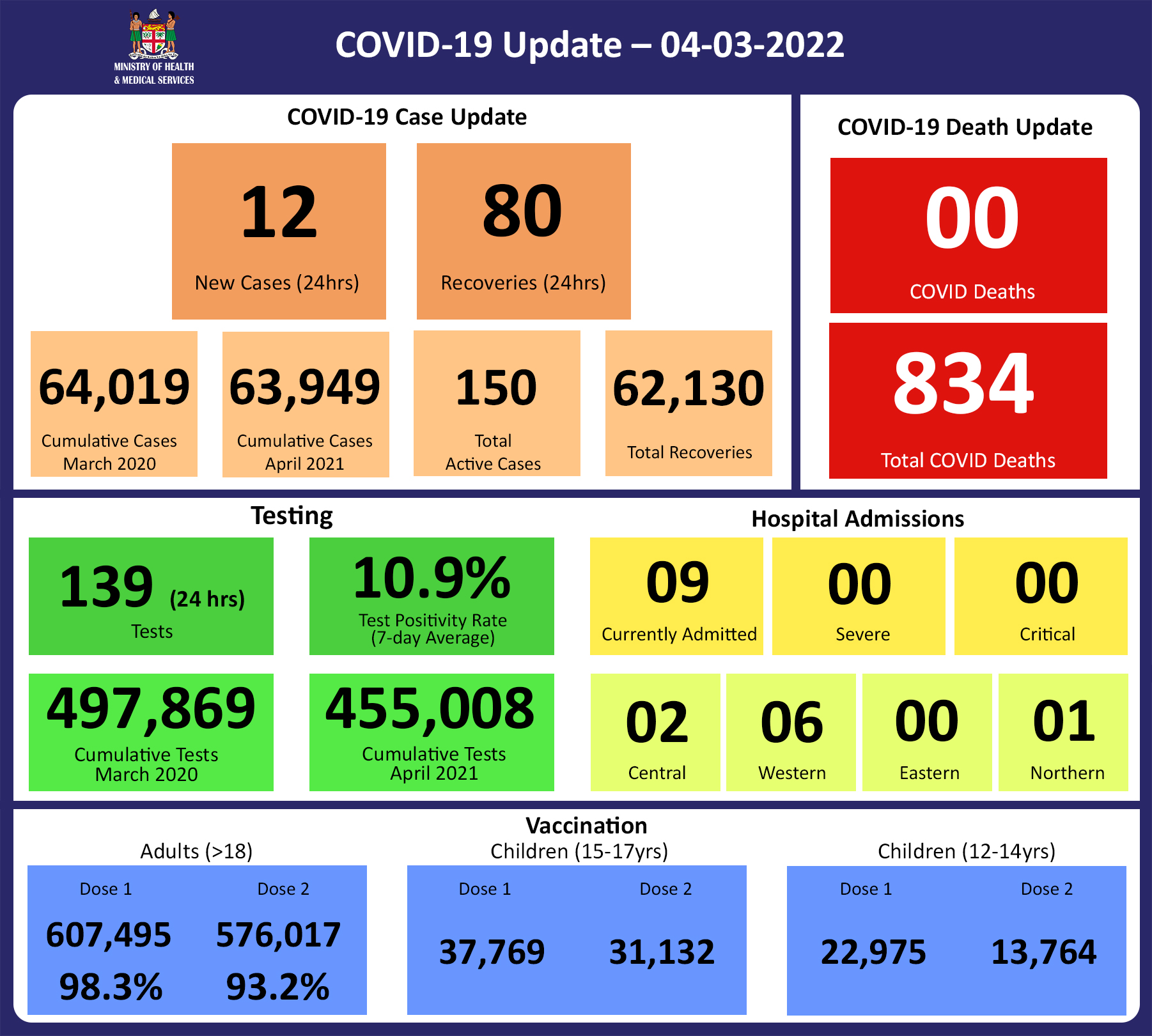
Since the last update, we have recorded 15 new cases of which 3 new cases were recorded on 03/03/2022 and 12 new cases in the last 24 hours ending at 8 am this morning.

Of the 15 cases recorded, 6 cases were recorded in the Central Division; 6 cases were recorded in the Western Division, 3 cases were recorded in the Northern Division, and nil case was recorded in the Eastern Division.

Overall, there have been 63,949 cases of COVID-19 recorded in Fiji, with 68% of the cases from the Central Division, 27% of the cases from the Western Division, 2% of the cases from the Eastern Division, and 3% from the Northern Division.

The national 7-day rolling average of cases as of 28th February is 45 daily cases.

Deaths:

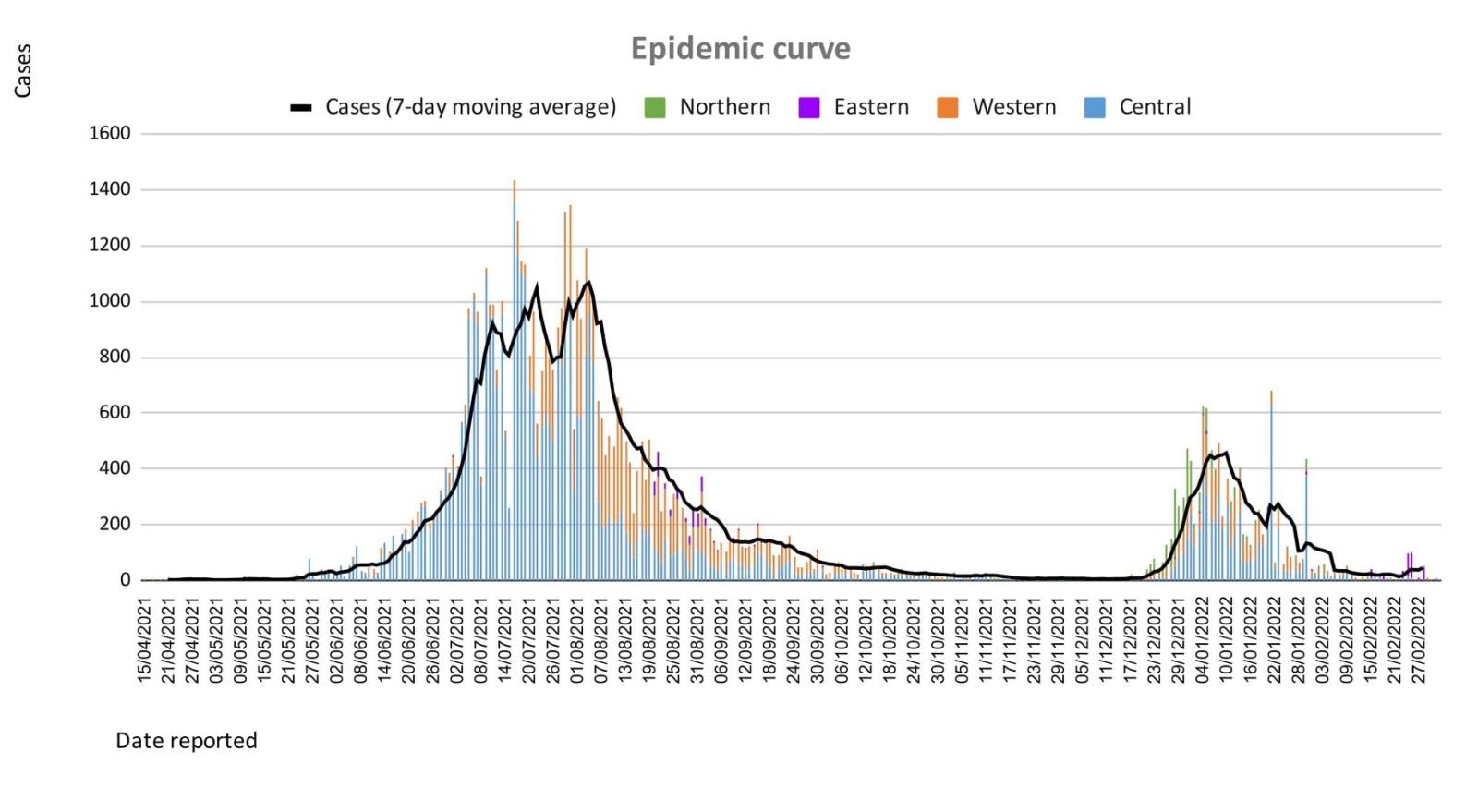
The curves depict daily COVID-19 deaths by division since May 2021. It indicates a surge from December-end 2021, which peaks by mid-January 2022. The 3rd COVID 19 wave is considered to have started around mid to late December 2021. (Note: Death notifications from within the last two weeks are still being received, therefore the graphs may alter slightly upon reporting).

Analysis of Deaths in the Third Wave 

Table 1: Death rates by Division

Division Total COVID Deaths Deaths per 100,000
Central 61 15.2
Western 44 12.3
Northern 28 20.0
Eastern 5 13.0

An analysis of the 138 deaths recorded in the third wave show that, while the Central Division has the highest absolute number of deaths, the Northern Division has the highest rate of death when adjusted for population. 

Table 2: Deaths by Age Group

Age Group Total Deaths Deaths per 100,000 population
0 – 9 6 3.3
10-19 2 1.3
20-29 3 2.1
30-39 4 2.9
40-49 6 5.8
50-59 18 19.8
60-69 27 51.9
70-79 42 187.5
80-89 23 408.8
90-99 5 961.5


For the 138 deaths in the third wave, the death rate adjusted per 100,000 population, has been highest in age groups 50 and onwards. There were 8 deaths below the age of 19 years, 7 out of the 8 children had significant pre-existing medical conditions, and one child had no known underlying medical condition.

Table 3: Deaths by Vaccination Status

Age Cohort Total COVID deaths Total Vaccinated/ Unvaccinated Deaths per 100,000 Vaccinated Population Deaths per 100,000 Unvaccinated Population
>18 130 55/75 9.5 175.1
15-17 1 0/1 0 6.6
12-14 1 0/1 0 2.5

Out of 138 COVID -19 deaths reported in the third wave, six (6) deaths were in the population not eligible for vaccination (under age 12). An analysis of the 132 deaths in the vaccine-eligible population reflected, that when adjusted per 100,000 population, for fully vaccinated (received 2 doses) and unvaccinated/not fully vaccinated (received 0 doses or only 1 dose) adults in Fiji, a death rate of 9.5 per 100,000 population for fully vaccinated adults and 176.3 for unvaccinated adults was exhibited. This means that unvaccinated adults in Fiji have been dying at a rate 18.5 times higher than fully vaccinated adults during the current COVID-19 wave. Individuals of the 12-17 age group who died were not vaccinated. There have been no COVID-19 deaths in individuals who received a booster (3rd dose) of the vaccine.

New deaths to report

There are no new COVID-19 deaths to report.

There have been a total of 834 deaths due to COVID-19 in Fiji. Please note that due to the time required by clinical teams to investigate, classify and report deaths, a 4-day interval is given to calculate the 7 days rolling average of deaths, based on the date of death, to help ensure the data collected is complete before the average is reported. Therefore, as of February 28th, 2022, the national 7 days rolling average for COVID-19 deaths per day is 0.1, with a case fatality rate of 1.29%.

We have recorded 903 COVID-19 positive patients who died from other serious medical conditions unrelated to COVID-19; their doctors determined that COVID-19 did not contribute to their deaths, therefore these are not classified as COVID-19 deaths.

Hospitalization:

There is a sustained downward trend in daily hospitalizations. Using the WHO clinical severity classification, a greater percentage, 78% (n=7) of the admissions of COVID-19 positive patients are categorised as asymptomatic and mild, 11% (n=1) is categorised as moderate and 11% (n=1) as severe with nil cases in the critical category. Anyone admitted to the hospital is tested before admission, therefore, a significant number of people are admitted to the hospital for non-covid health conditions, but incidentally, test positive due to the high amount of transmission in the community. The number of people being admitted because of COVID-19 remains low.

Testing:

139 tests have been reported for March 3rd, 2022. Total cumulative tests since 2020 are 497,869 tests. The 7-day daily test average is 177 tests per day or 0.2 tests per 1,000 population.

The national 7-day average daily test positivity is 10.9%. The high positivity rate is an indication of widespread community transmission.

Public Advisory:

Leptospirosis, typhoid fever, and dengue fever

As previously mentioned, the recent weather has resulted in conditions conducive to outbreaks of leptospirosis, typhoid, and dengue fever, which are climate-sensitive diseases endemic to Fiji. We are also aware of the recent weather reports predicting increasing rainfall over the next few days, and as such the medical advice we provide needs to be followed, while we continue to mount our public health and clinical response. We have especially noted increasing leptospirosis cases, hospitalisations, and deaths following similar weather events. Please heed our advice to protect yourselves and your loved ones.

Leptospirosis

The Permanent Secretary of Health together with senior advisory managers are currently visiting the Ra sub-division to speculate on the current rising cases of leptospirosis in the division.

Being an infectious disease, there have been 567 confirmed cases of leptospirosis in Fiji so far, with outbreaks occurring in all four divisions.

An increase in the number of cases admitted to hospitals infected with leptospirosis has been noted, with a death toll of 23 since the last update on 23/02/2022.

Although all age groups are able to host the infection, cases remain predominantly higher in ages 10-39-years more in males than females, and in people of the i-Taukei ethnicity.

Prevention

The leptospirosis bacteria is spread to humans through the urine of infected animals, such as cows, pigs, rats, and dogs. To reduce your individual risk, it is important to understand that exposure to animals, soil, mud, and floodwaters during work or recreational activities increases your risk of infection.

Important prevention measures include wearing full covered footwear at all times when going outdoors, avoiding wading or swimming in flooded waters, using clean fresh water to wash up after exposure to muddy waters, and keeping all food and drinks covered and away from rats. For workplaces, practice good personal hygiene at all times, cover cuts and wounds well, and use protective equipment, especially footwear when in flooded and/or muddy areas.

We are also urging all parents and guardians to prevent children from playing in the mud or swimming in flooded rivers or creeks, and ensure that they wear shoes when outside.

Symptoms and treatment

Early treatment can decrease the severity and duration of the disease. Please seek medical care if you have recently had contact with floodwaters, mud, or animals, and develop the following symptoms: fever, muscle pain, headache. You may also have red eyes, loss of appetite, nausea/vomiting, dizziness, or feel weak.

Leptospirosis can be treated with appropriate antibiotic medications prescribed by a doctor if treatment is sought early. Danger signs for severe leptospirosis include shortness of breath, coughing blood, chest pain, yellow eyes/skin (jaundice), signs of bleeding (including unexplained bruising), decreased or increased urination, difficulty staying awake. Severe leptospirosis is life-threatening, and anyone with these symptoms must be taken to the hospital immediately.

Response

In response to the leptospirosis outbreak, the Ministry has mobilized FEMAT, first to Navosa, and now to Ra to assist the local medical teams in providing services and outreach to communities. Awareness messaging has also been distributed to the public through radio, television, print, and social media, focusing on prevention and early healthcare seeking for suspected cases. And our clinicians have had access to continuing medical education sessions remotely, or in person, by our specialist physicians from the divisional hospitals, to promote early diagnosis and treatment of people who may have leptospirosis.

Typhoid fever

There have been 44 cases of typhoid fever in Fiji this year. This is equivalent to the number recorded within the same time period last year.

Typhoid fever is typically found in areas that do not have access to clean drinking water. We strongly encourage people who live in rural areas, informal urban areas, and any other areas where access to clean drinking water is limited, to boil all drinking water. We must all also continue to practise basic hygiene measures such as frequently washing hands with soap and water, especially after visiting the toilet and before eating or preparing food.

Dengue fever

There have been 633 confirmed cases of dengue fever in Fiji so far, which is within the numbers expected for this time of the year.

We continue to urge everyone to get rid of potential mosquito breeding places, such as empty containers inside and outside your homes that may collect water, including discarded tires, flower vases, and pot plant bases. Protect yourself from being bitten by mosquitoes by using mosquito screens in your homes, and mosquito repellants.

COVID-19 Vaccination

As of the 04th of March, a total of 105,295 individuals have so far received booster doses. Members of the public are advised to obtain their booster dose after at least 5 months from their second COVID-19 vaccine dose. Moderna vaccine and Pfizer vaccines are both available for adult booster doses.

The Ministry of Health and Medical Services will continue to monitor the advisories on post-infection immunity based on quality data that is being generated globally

Given the current stocks of Pfizer Vaccine we have we will be using Pfizer for ongoing primary 2 dose schedule of children and adults and as the booster dose.

Supporting International Travel

  • Plan to remove 3-day hotel stay for fully vaccinated travellers from Travel Partner Countries.

Since the opening of international travel borders to travel partner countries travellers coming in from Travel Partner Countries have had to undergo an in-country test in Fiji on day 2 of stay in Fiji. To support this requirement, a 3-day hotel stay was mandated to minimize the risk of non-compliance to testing and to ensure that all positive tests were appropriately responded to while the traveller was locatable. To be clear, this 3-day stay in a Care Fiji Commitment (CFC) hotel was never a quarantine. The hotel stay is in place to facilitate the testing requirement on day 2 of arrival.

We have noted that while many countries have removed all forms of traveller sequestration, the in-country testing conditions continue. As such we are supporting current efforts to have more testing sites throughout Fiji to which travellers can book for testing, without requiring a hotel stay, as part of prior approval to come into Fiji. We are working together with the Ministry of Trade and Tourism and Ministry of Economy in the final phase of approving this in-country testing for international arrivals by private entities. These private entities will ensure that the test is available and the results will be reported back to Ministry of Health officials. They will also be mandated to report any international traveller who defaults from the mandatory testing. Any traveller defaulting a test will be subject to legal punitive measures.

  • Ongoing Review of Non-Travel Partner Country Status

This ongoing effort is mediated through the Ministry of Commerce, Trade, Tourism and Transport, and the Ministry of Economy (COVID-19 Risk Mitigation Taskforce). Non-Travel Partner Status is assessed and graduated to Travel Partner status based on COVID-19 Transmission Data (cases, admission, and deaths), COVID-19 Community Surveillance data (Test per 1000, positivity rate), and ability to detect Variants (Access to genomic sequence capability). A list of Travel partner countries is available on the following link: https://www.mcttt.gov.fj/home/traveltofiji/international-travel/#b

COVID-19 Vaccination Program

2nd March 2022
Public Advisory

Individuals who are currently receiving the first and second dose of the COVID-19 vaccines will be administered with the Pfizer COVID-19 vaccine. The Ministry of Health and Medical Services reminds the public that currently there are no stocks of AstraZeneca vaccine in the country therefore, Pfizer is offered for primary series.

Additionally, both, Pfizer and Moderna COVID-19 vaccines are administered as booster doses to individuals aged 18 years and above. Individuals become eligible for the booster dose 5 months after they have received their 2nd dose.
Eligible individuals are encouraged to get their booster doses to maintain maximum and longer-lasting protection against severe consequences from COVID-19.

COVID-19 Update 02-03-2022

COVID-19 Situation Update

Wednesday 02nd March

Transmission Update:

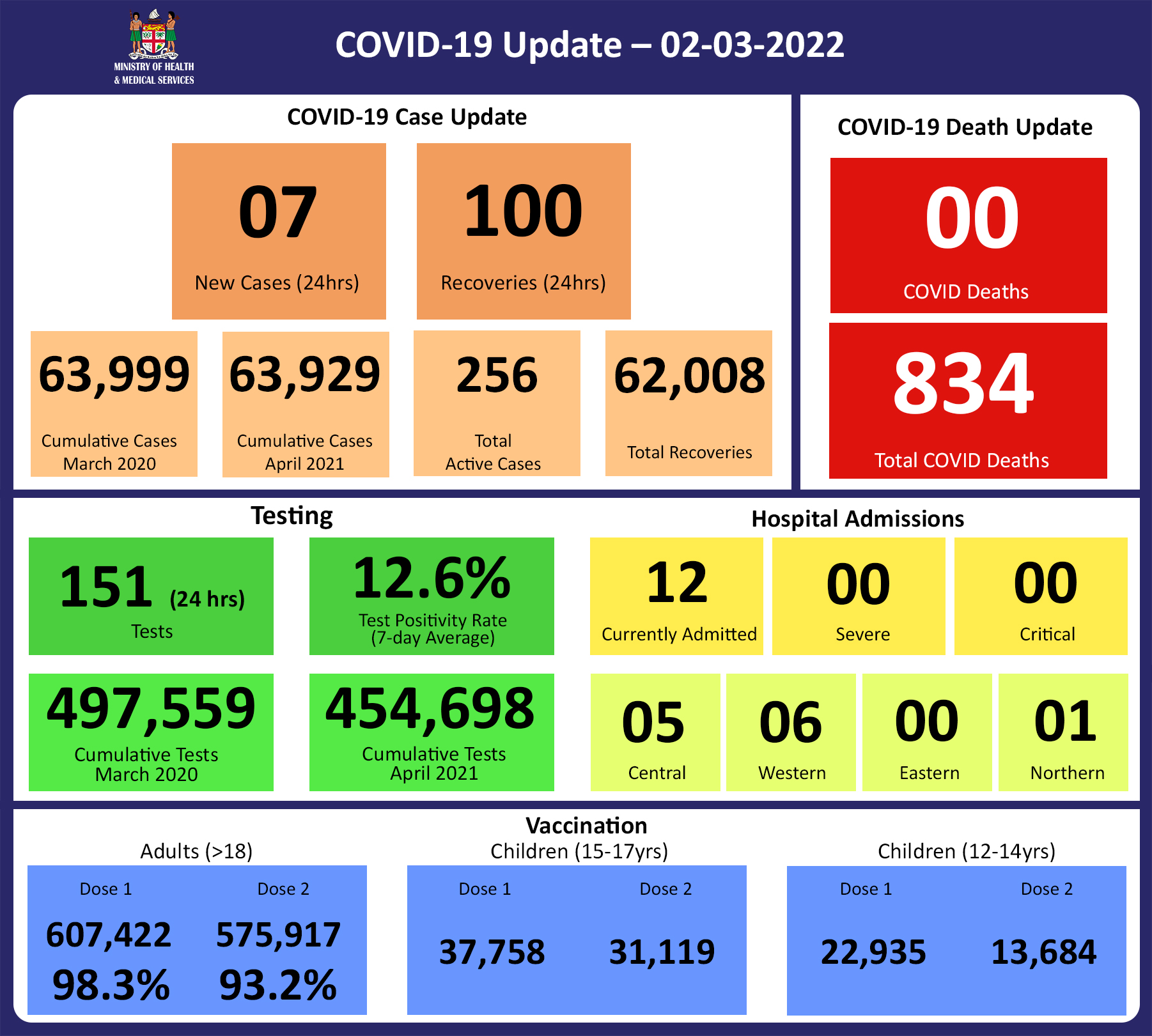
Since the last update, we have recorded 62 new cases of which 55 new cases were recorded on 01/03/2022 and 7 new cases in the last 24 hours ending at 8 am this morning.

Of the 62 cases recorded, 2 cases were recorded in the Central Division; 7 cases were recorded in the Western Division, 6 cases were recorded in the Northern Division, and 47 cases were recorded in the Eastern Division.

The national 7-day rolling average of cases as of 26th February is 38 daily cases.

In the 7 days until 01/03/2022, 35 new cases were recorded in the Central division, 22 new cases in the Western division, 12 new cases in the Northern Division, and 390 new cases in the Eastern Division.

The Central Division cases constitute 68% of the cumulative total cases nationally, with the Western division making up 27%, 3% in the Northern Division, and 2% in the Eastern Division.

Deaths:

The curves depict weekly COVID-19 deaths by division since May 2021. It indicates a surge from December-end 2021, which peaks by mid-January 2022. The 3rd COVID 19 wave is considered to have started around mid to late December 2021. (Note: Death notifications from within the last two weeks are still being received, therefore the graphs may alter slightly upon reporting).

Analysis of Deaths in the Third Wave 

Table 1: Death rates by Division

Division Total COVID Deaths Deaths per 100,000
Central 61 15.2
Western 44 12.3
Northern 28 20.0
Eastern 5 13.0

An analysis of the 138 deaths recorded in the third wave shows that, while the Central Division has the highest absolute number of deaths, the Northern Division has the highest rate of death when adjusted for population. 

Table 2: Deaths by Age Group

Age Group Total Deaths Deaths per 100,000
population
0 – 9 6 3.3
10-19 2 1.3
20-29 3 2.1
30-39 4 2.9
40-49 6 5.8
50-59 18 19.8
60-69 27 51.9
70-79 42 187.5
80-89 23 408.8
90-99 5 961.5

For the 138 deaths in the third wave, the death rate adjusted per 100,000 population, has been highest in age groups 50 and onwards. There were 8 deaths below the age of 19 years, 7 out of the 8 children had significant pre-existing medical conditions, and one child had no known underlying medical condition.

Table 3: Deaths by Vaccination Status

Age Cohort Total COVID deaths Total Vaccinated/ Unvaccinated Deaths per 100,000 Vaccinated Population Deaths per 100,000 Unvaccinated Population
>18 130 55/75 9.5 175.1
15-17 1 0/1 0 6.6
12-14 1 0/1 0 2.5

Out of 138 COVID -19 deaths reported in the third wave, six (6) deaths were in the population not eligible for vaccination (under age 12). An analysis of the 132 deaths in the vaccine-eligible population reflected, that when adjusted per 100,000 population, for fully vaccinated (received 2 doses) and unvaccinated/not fully vaccinated (received 0 doses or only 1 dose) adults in Fiji, a death rate of 9.5 per 100,000 population for fully vaccinated adults and 176.3 for unvaccinated adults was exhibited. This means that unvaccinated adults in Fiji have been dying at a rate 18.5 times higher than fully vaccinated adults during the current COVID-19 wave. Individuals of the 12-17 age group who died were not vaccinated. There have been no COVID-19 deaths in individuals who received a booster (3rd dose) of the vaccine.

New deaths to report

There is no new COVID-19 death to report.

There have been a total of 834 deaths due to COVID-19 in Fiji. Please note that due to the time required by clinical teams to investigate, classify and report deaths, a 4-day interval is given to calculate the 7 days rolling average of deaths, based on the date of death, to help ensure the data collected is complete before the average is reported. Therefore, as of February 24th, 2022, the national 7 days rolling average for COVID-19 deaths per day is 0.1, with a case fatality rate of 1.29%.

We have recorded 899 COVID-19 positive patients who died from other serious medical conditions unrelated to COVID-19; their doctors determined that COVID-19 did not contribute to their deaths, therefore these are not classified as COVID-19 deaths.

Hospitalization:

There is a sustained downward trend in daily hospitalizations. Using the WHO clinical severity classification, a greater percentage, 75% (n=9) of the admissions of COVID-19 positive patients are categorised as asymptomatic and mild, 17% (n=2) is categorised as moderate and 8% (n=1) as severe with nil cases in the critical category. Anyone admitted to the hospital is tested before admission, therefore, a significant number of people are admitted to the hospital for non-covid health conditions, but incidentally, test positive due to the high amount of transmission in the community. The number of people being admitted because of COVID-19 remains low.

Testing:

151 tests have been reported for March 1st, 2022. Total cumulative tests since 2020 are 497,559 tests. The 7-day daily test average is 198 tests per day or 0.2 tests per 1,000 population.

The national 7-day average daily test positivity is 12.6%. The high positivity rate is an indication of widespread community transmission.

Public Advisory:

Leptospirosis, typhoid fever, and dengue fever

As previously mentioned, the recent weather has resulted in conditions conducive to outbreaks of leptospirosis, typhoid, and dengue fever, which are climate-sensitive diseases endemic to Fiji. We are also aware of the recent weather reports predicting increasing rainfall over the next few days, and as such the medical advice we provide needs to be followed, while we continue to mount our public health and clinical response. We have especially noted increasing leptospirosis cases, hospitalisations, and deaths following similar weather events. Please heed our advice to protect yourselves and your loved ones.

Leptospirosis

Update:

There have been 567 confirmed cases of leptospirosis this year with outbreaks ongoing in all four divisions.

In the Western Division, there have been 236 cases, with 42% from Lautoka, 23% from Nadi, 17% from Ba, 9% from Tavua, 6% from Ra, and 3% from Nadroga/Navosa.

In the Central Division, there have been 193 cases, with 42% from Suva, 22% from Rewa, 13% from Serua/Namosi, 9% from Tailevu, 8% from Nasinu, and 6% from Naitasiri

In the Northern Division, there have been 122 cases, with 95% of cases from Macuata, 2% in Cakaudrove, and 1% in Taveuni

In the Eastern Division, there have been 16 cases from Levuka and Kadavu.

For hospital admissions so far this year there have been:

  • 154 admissions in the West, with 42 new admissions last week.
  • 86 admissions in Central, with 20 admissions last week. A particular concern has been an increase in children being admitted to CWM Hospital with leptospirosis, with 9 admitted over the weekend.
  • 26 in the Northern Division, with 2 new admissions last week.
  • 5 in the Eastern Division (4 in Levuka, and 1 in Kadavu), with no new admissions last week.

Sadly, there have been 3 more deaths caused by leptospirosis since the last update on 23/02/22: a 63-year-old from Nadi, an 8-year-old from Navua, and a 20-year-old from Taveuni. There have been a total of 23 deaths from leptospirosis this year, with 18 in the Western Division, 2 in Central, and 3 in the North.

While we have seen cases in all age groups. Cases remain predominantly in the 10-39-year-old age group, with more in males than females, and in people of the i-Taukei ethnicity.

Prevention

The leptospirosis bacteria is spread to humans through the urine of infected animals, such as cows, pigs, rats, and dogs. To reduce your individual risk, it is important to understand that exposure to animals, soil, mud, and floodwaters during work or recreational activities increases your risk of infection.

Important prevention measures include wearing full covered footwear at all times when going outdoors, avoiding wading or swimming in flooded waters, using clean fresh water to wash up after exposure to muddy waters, and keeping all food and drinks covered and away from rats. For workplaces, practice good personal hygiene at all times, cover cuts and wounds well, and use protective equipment, especially footwear when in flooded and/or muddy areas.

We are also urging all parents and guardians to prevent children from playing in the mud or swimming in flooded rivers or creeks, and ensure that they wear shoes when outside.

Symptoms and treatment

Early treatment can decrease the severity and duration of the disease. Please seek medical care if you have recently had contact with floodwaters, mud, or animals, and develop the following symptoms: fever, muscle pain, headache. You may also have red eyes, loss of appetite, nausea/vomiting, dizziness, or feel weak.

Leptospirosis can be treated with appropriate antibiotic medications prescribed by a doctor if treatment is sought early. Danger signs for severe leptospirosis include shortness of breath, coughing blood, chest pain, yellow eyes/skin (jaundice), signs of bleeding (including unexplained bruising), decreased or increased urination, difficulty staying awake. Severe leptospirosis is life-threatening, and anyone with these symptoms must be taken to the hospital immediately.

Response

In response to the leptospirosis outbreak, the Ministry has mobilized FEMAT, first to Navosa, and now to Ra to assist the local medical teams in providing services and outreach to communities. Awareness messaging has also been distributed to the public through radio, television, print, and social media, focusing on prevention and early healthcare seeking for suspected cases. And our clinicians have had access to continuing medical education sessions remotely, or in person, by our specialist physicians from the divisional hospitals, to promote early diagnosis and treatment of people who may have leptospirosis.

Typhoid fever

There have been 44 cases of typhoid fever this year. The Central Division has recorded 14 cases, which is within the number of cases expected for this time of the year. The Northern Division has reported 6 cases (mostly from Bua), which is within the number of cases expected for this time of year. The Western Division has recorded 23 cases, with an increasing trend that has surpassed the outbreak threshold in the last 2 weeks. 10 cases were recorded in the last 2 weeks from Ra, Sigatoka, Nadi, Lautoka, and Ba.

Typhoid fever is typically found in areas that do not have access to clean drinking water. We strongly encourage people who live in rural areas, informal urban areas, and any other areas where access to clean drinking water is limited, to boil all drinking water. We must all also continue to practise basic hygiene measures such as frequently washing hands with soap and water, especially after visiting the toilet and before eating or preparing food.

Dengue fever

There have been 633 confirmed cases of dengue fever so far this year, which is within the numbers expected for this time of the year. Central Division has recorded 166 cases, which is below the average cases expected based on the previous years’ data. The Northern Division has reported 153 cases, which is within expected levels. The Western Division is experiencing an outbreak, recording 249 cases, which is beyond the expected number for this time of the year. 49% of cases are from Nadi, 24% from Tavua, 12% from Ba, 9% from Lautoka/Yasawa, and 6% from Nadroga/Navosa. There have been 65 cases in the Eastern Division (95% Levuka and 9% Kadavu) with an upward trend noted.

We continue to urge everyone to get rid of potential mosquito breeding places, such as empty containers inside and outside your homes that may collect water, including discarded tires, flower vases, and pot plant bases. Protect yourself from being bitten by mosquitoes by using mosquito screens in your homes, and mosquito repellants.

COVID-19 Vaccination

As of the 27th  of February, a total of 104,572 individuals have so far received booster doses. Members of the public are advised to obtain their booster dose after at least 5 months from their second COVID-19 vaccine dose. Moderna vaccine and Pfizer vaccines are both available for adult booster doses.

The Ministry of Health and Medical Services will continue to monitor the advisories on post-infection immunity based on quality data that is being generated globally

Given the current stocks of Pfizer Vaccine we have we will be using Pfizer for the ongoing primary 2 dose schedule of children and adults and as the booster dose.

Supporting International Travel

  • Plan to remove 3-day hotel stay for fully vaccinated travellers from Travel Partner Countries.

Since the opening of international travel borders to travel partner countries travellers coming in from Travel Partner Countries have had to undergo an in-country test in Fiji on day 2 of stay in Fiji. To support this requirement, a 3-day hotel stay was mandated to minimize the risk of non-compliance to testing and to ensure that all positive tests were appropriately responded to while the traveller was locatable. To be clear, this 3-day stay in a Care Fiji Commitment (CFC) hotel was never a quarantine. The hotel stay is in place to facilitate the testing requirement on day 2 of arrival.

We have noted that while many countries have removed all forms of traveller sequestration, the in-country testing conditions continue. As such we are supporting current efforts to have more testing sites throughout Fiji to which travellers can book for testing, without requiring a hotel stay, as part of prior approval to come into Fiji. We are working together with the Ministry of Trade and Tourism and Ministry of Economy in the final phase of approving this in-country testing for international arrivals by private entities. These private entities will ensure that the test is available and the results will be reported back to Ministry of Health officials. They will also be mandated to report any international traveller who defaults from the mandatory testing. Any traveller defaulting a test will be subject to legal punitive measures.

  • Ongoing Review of Non-Travel Partner Country Status

This ongoing effort is mediated through the Ministry of Commerce, Trade, Tourism and Transport, and the Ministry of Economy (COVID-19 Risk Mitigation Taskforce). Non-Travel Partner Status is assessed and graduated to Travel Partner status based on COVID-19 Transmission Data (cases, admission, and deaths), COVID-19 Community Surveillance data (Test per 1000, positivity rate), and ability to detect Variants (Access to genomic sequence capability). A list of Travel partner countries is available on the following link: https://www.mcttt.gov.fj/home/traveltofiji/international-travel/#b
Rapid Antigen Tests Approved for Import into Fiji

POINT OF CARE TESTS

Rapid antigen point of care tests are tests that can be performed by health professionals, or trained persons under their supervision. This ensures a suitable health professional, or trained person under their supervision is available to ensure an adequate sample is collected, the results are interpreted correctly, and immediate clinical advice and treatment can be provided if required.

Conditions for the supply of COVID-19 Antigen Rapid Diagnostic Tests listed as Point of Care Tests

  • Any person who imports and/or distributes the device shall only supply the device to one or more of the following:
    a. An accredited pathology laboratory
    b. A pharmacist who is registered under the Pharmacy Profession Act 2011 to practice pharmacy where:
    i. the pharmacist is responsible for performing or supervising the performance of the test; and
    ii. the pharmacist and any other person acting under their supervision to perform the test have received training in the correct use of the device and the interpretation of the test result;
    c. A health professional according to the interpretation in the Medical and Dental Practitioners Act where:
    i. the health professional is responsible for performing or supervising the performance of the test; and
    ii. the health professional and any other person acting under their supervision to perform the test have received training in the correct use of the device and the interpretation of the test result; and
    iii. the device is only used to test employees or contractors; or a patient under the direct care of the health professional;
    d. An organisation, business, or institution that employs or engages a health professional or a paramedic where:
    i. the health professional or the paramedic is responsible for performing or supervising the performance of the test; and
    ii. the person mentioned in subparagraph (i) and any other person acting under their supervision to perform the test have received training in the correct use of the device and the interpretation of the test result; and
    iii. the device is only used to test employees, contractors, or students of the organisation, business, or institution;e. A hospital or any public health facility
  • The device must not be supplied for the purpose of self-testing.
  • The distributor must maintain records that demonstrate the device has been supplied in compliance with these conditions.
  • A list of all rapid antigen point-of-care tests approved for supply in Fiji is available on the MOH website and will be regularly updated as new tests are approved or if tests are canceled or withdrawn.
    RDT lists Point of Care

    Adapted from COVID-19 rapid Antigen Point of Care Testing: Guidance for implementation and checklist for businesses, 2022, Therapeutic Goods Administration, used with permission of the Australian Government
    https://www.tga.gov.au/sites/default/files/covid-19-rapid-antigen-tests-guidance-and-checklistbusinesses.pdf

    RAPID ANTIGEN SELF-TESTS (HOME USE TESTS)

    These are tests that can be used unsupervised at home without the involvement of a health professional. The person collects the sample, performs the test, and interprets the results by themselves.

    IMPORT and DISTRIBUTION of SELF-TEST

    1) A list of all COVID-19 rapid antigen self-tests (home use tests) that are approved for supply in Fiji is available on the Ministry of Health website along with the manufacturer’s instructions for how to use the tests.
    RDT list of Self-Test

2) This list is regularly updated as new tests are approved or if tests are canceled or withdrawn.

3) No import permit is required for the import, export, or distribution of Self-Test kits in the list, however,

4) An import permit may be required for a Self-Test kit not yet included in the list.

5) Self-Test or Home use Test kits can be purchased from pharmacies or from any other retail outlet that stocks the test.

6) All distributors of self-tests should supply the device in accordance with the conditions of the manufacturer

7) The distributor must also maintain records relating to all supplies of rapid antigen self-tests and be able to provide this information when required.

8) Companies, businesses, organisations, or institutions can purchase rapid antigen self-tests for their workers to use at home or on-site.

9) Businesses that choose to use a COVID-19 rapid self-test do not need to comply with the requirements for supervision of testing.

10) It is important that any business considering implementing rapid antigen testing takes into consideration the implications of testing in these environments, including:

  • processes to maintain the confidentiality of patient information
  • a procedure for possible closure of the business and isolation of staff if a positive result is received from a rapid antigen test, and
  • any Ministry of Health directions around rapid antigen testing and reporting of positive test results.

11) For any positive result, follow the Ministry of Health’s advice on what needs to be done next.

12) Do not just repeat the test in the hope of the second test being negative.

13) If symptoms persist or a person still feels unwell despite obtaining a negative result with a self-test, contact the nearest healthcare facility for a PCR test.

Disposal of Self-Tests or Home-use Test

  1. Follow the instructions provided with the home use test on how to dispose of it. Some tests come with a plastic bag for placing the contents of the swab etc. into before placing this in the household rubbish bin.
    Adapted from COVID-19 rapid Antigen Point of Care Testing: Guidance for implementation and checklist for
    businesses, 2022, Therapeutic Goods Administration, used with permission of the Australian Government
    https://www.tga.gov.au/sites/default/files/covid-19-rapid-antigen-tests-guidance-and-checklistbusinesses.pdf
  2. If no bag is provided, place the used items from the test into a small plastic bag which is then sealed. This bag should then go straight into another bag which should be sealed and then disposed of in the household rubbish.
  3. Wash hands thoroughly after disposal in line with good COVID safe practices.
  4. The distributor must also maintain records relating to all supplies of rapid antigen self-tests and be able to provide this information to the overseas supplier.