MHMS FIJI
COVID-19 Update 06-12-2021

COVID-19 Situation Update

Monday 06th December
Transmission Update:

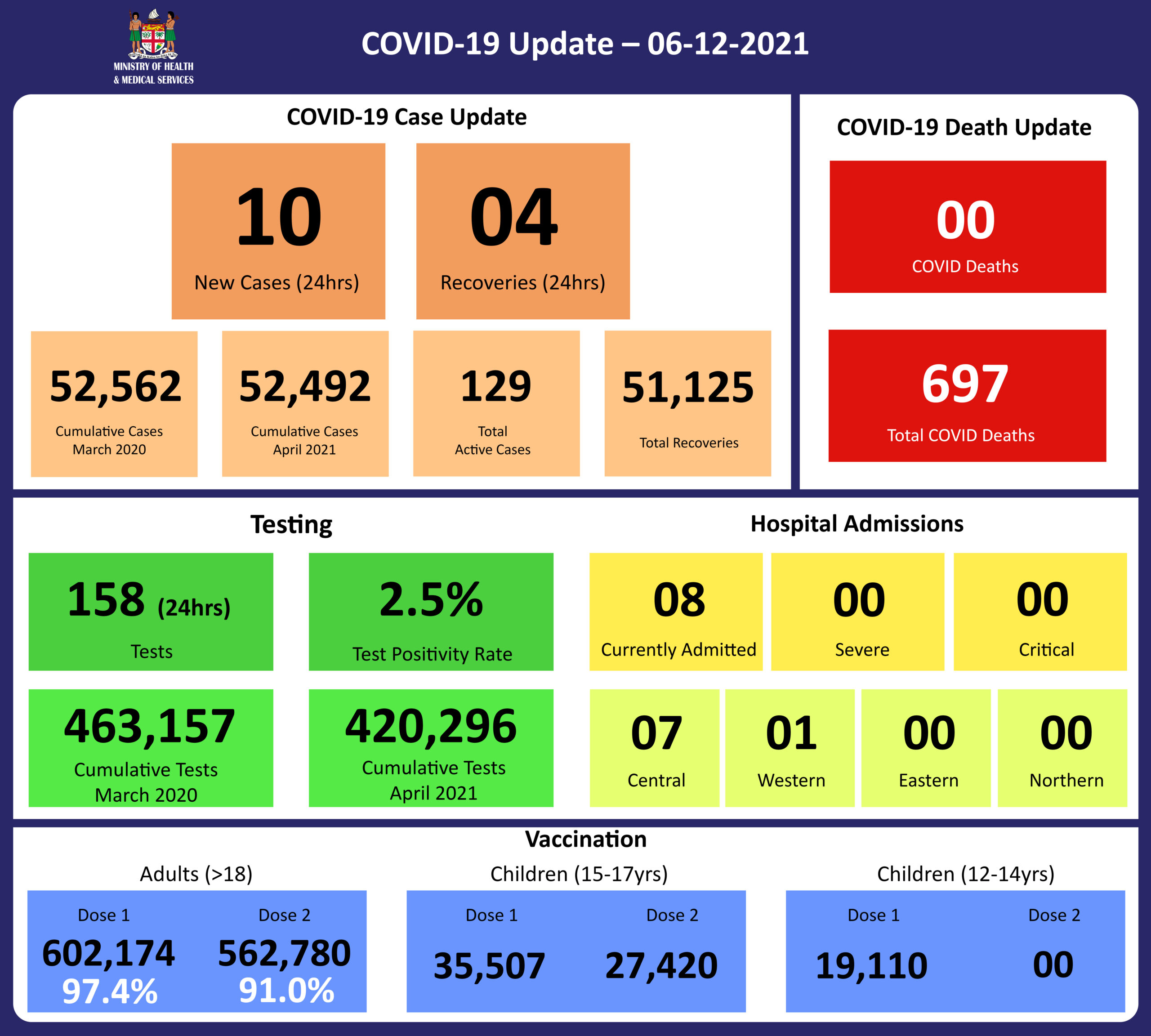
Since the last update, we have recorded a total of 19 new cases; of which 3 new cases were recorded on 04/12/2021, 6 new cases were recorded on 05/12/2021, and 10 new cases in the last 24 hours ending at 8 am this morning.

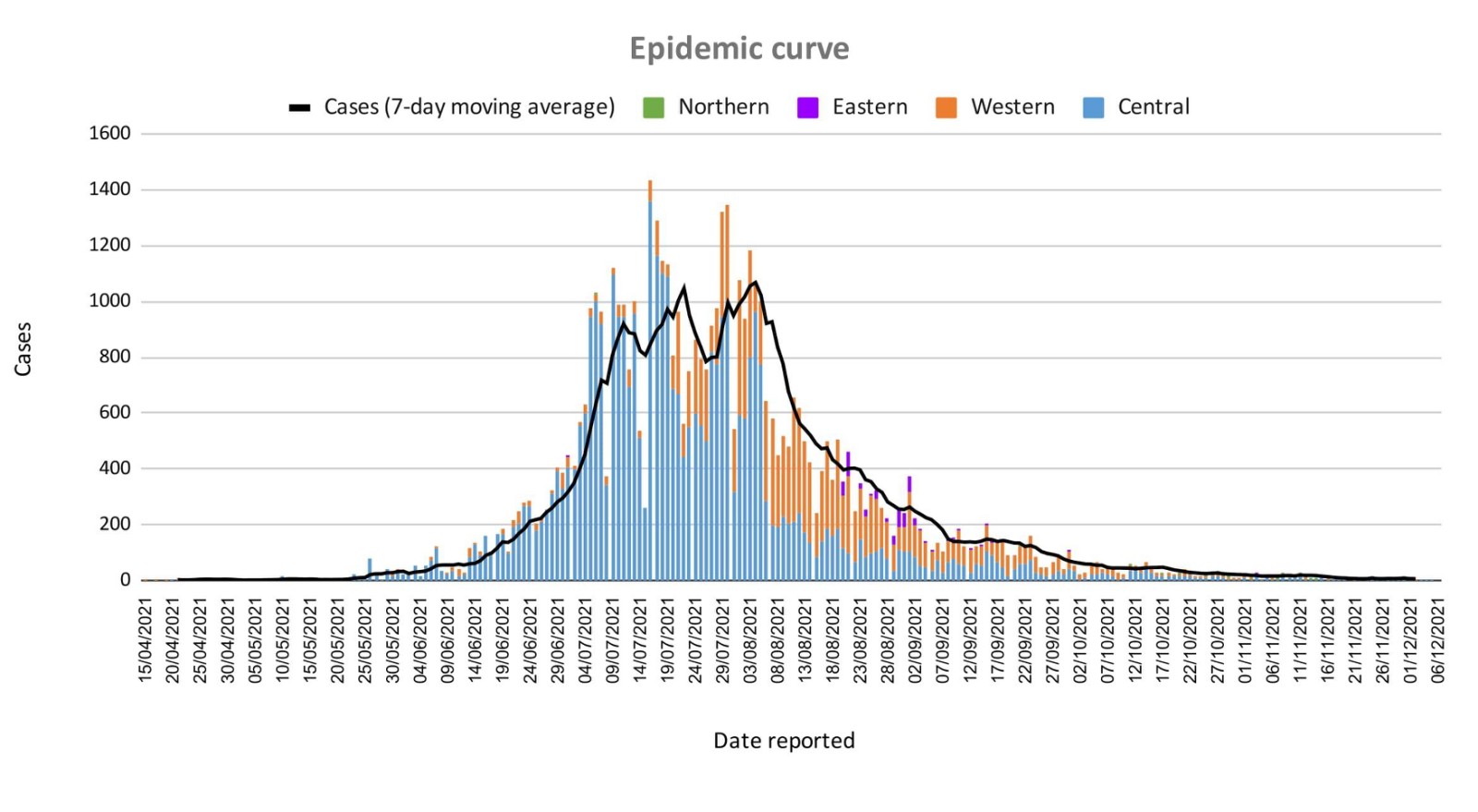
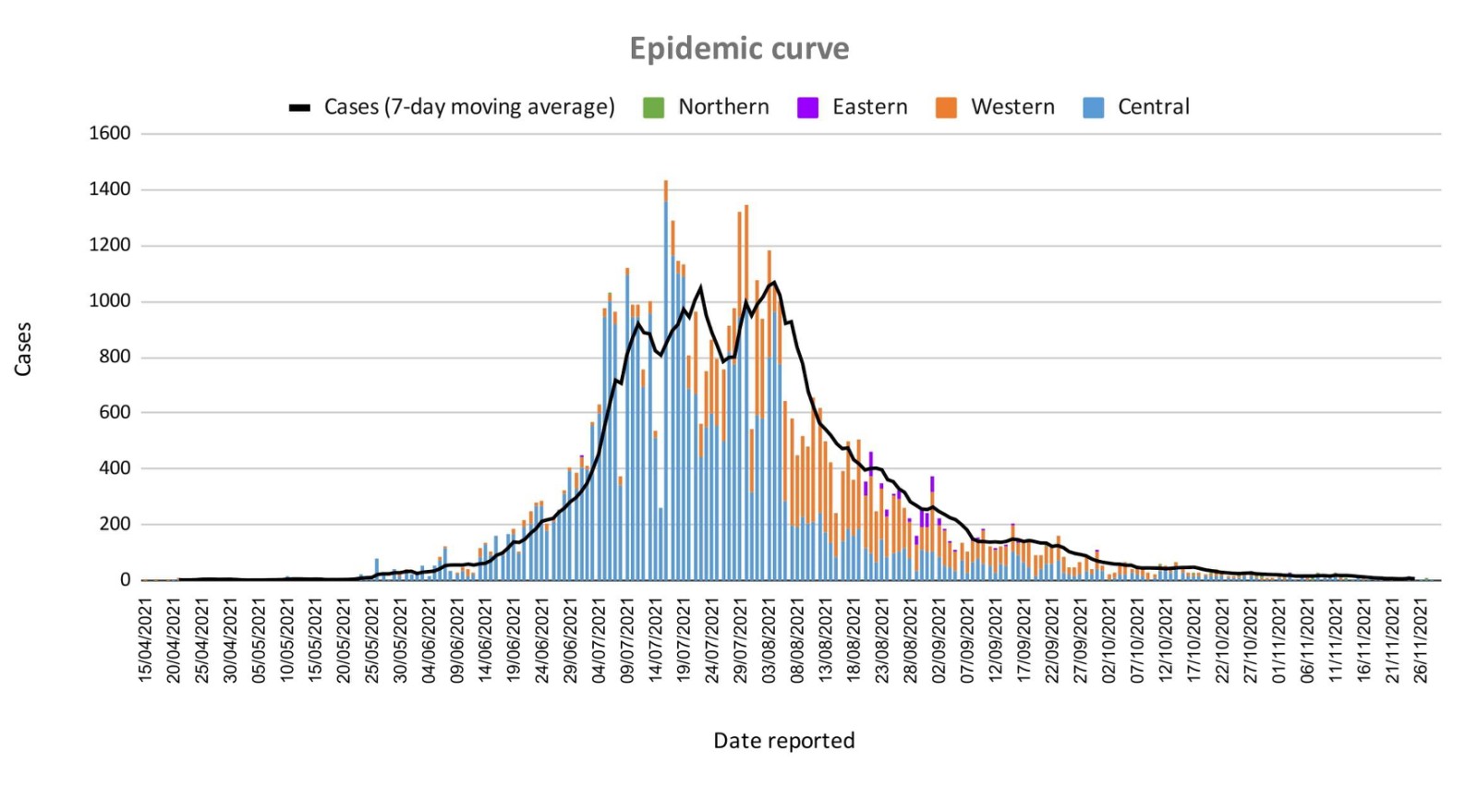
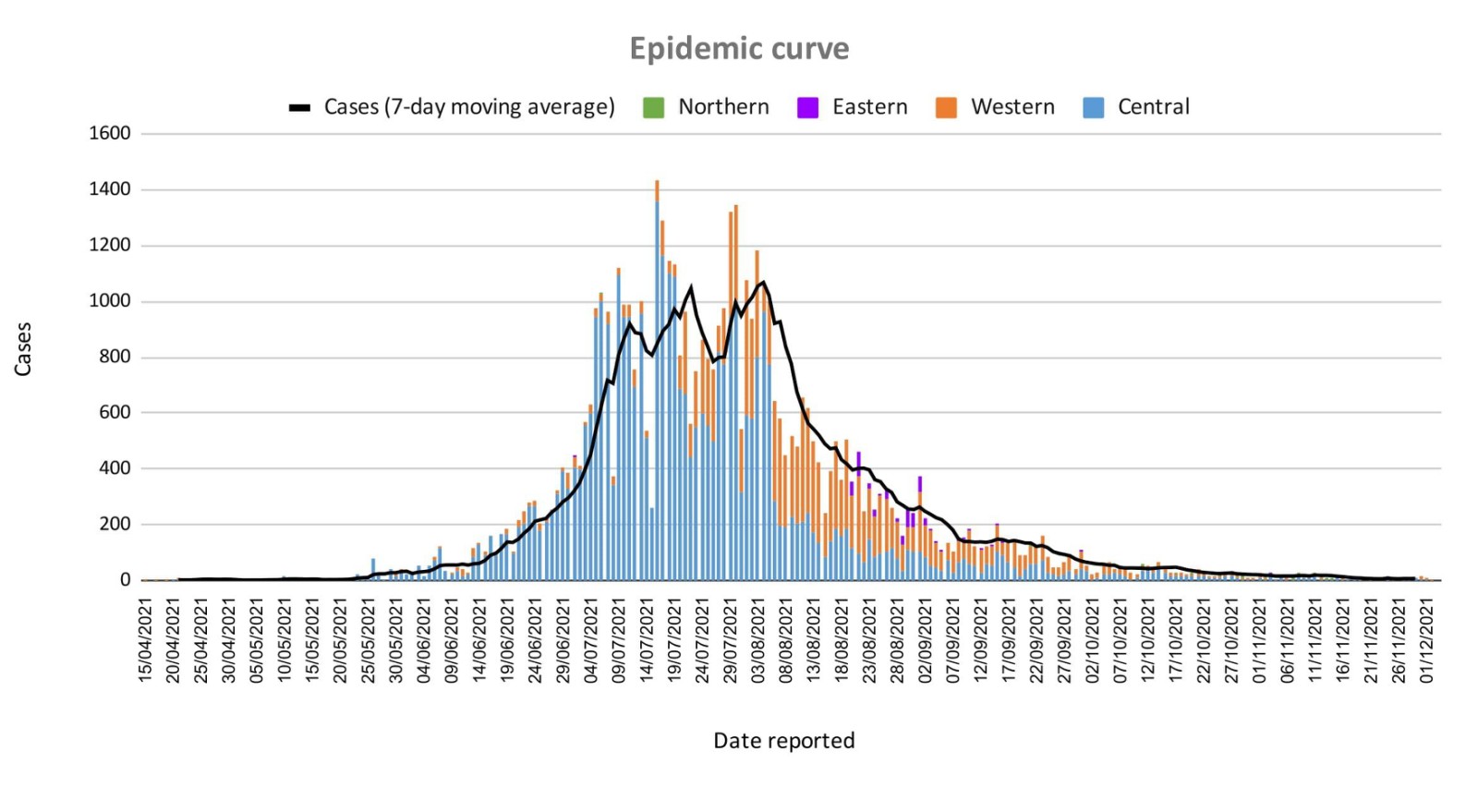
This epidemic curve depicts the daily positive cases since the 2nd wave of this outbreak that began in April 2021. Overall, for this 2nd wave, there have been 52,492 cases recorded, with 71% of the cases from the Central Division, 28% of the cases from the Western Division, and 1% of the cases from the Eastern and Northern Division. 

Our National 7- day rolling average is 6 daily cases calculated for 2nd December 2021.

Deaths:

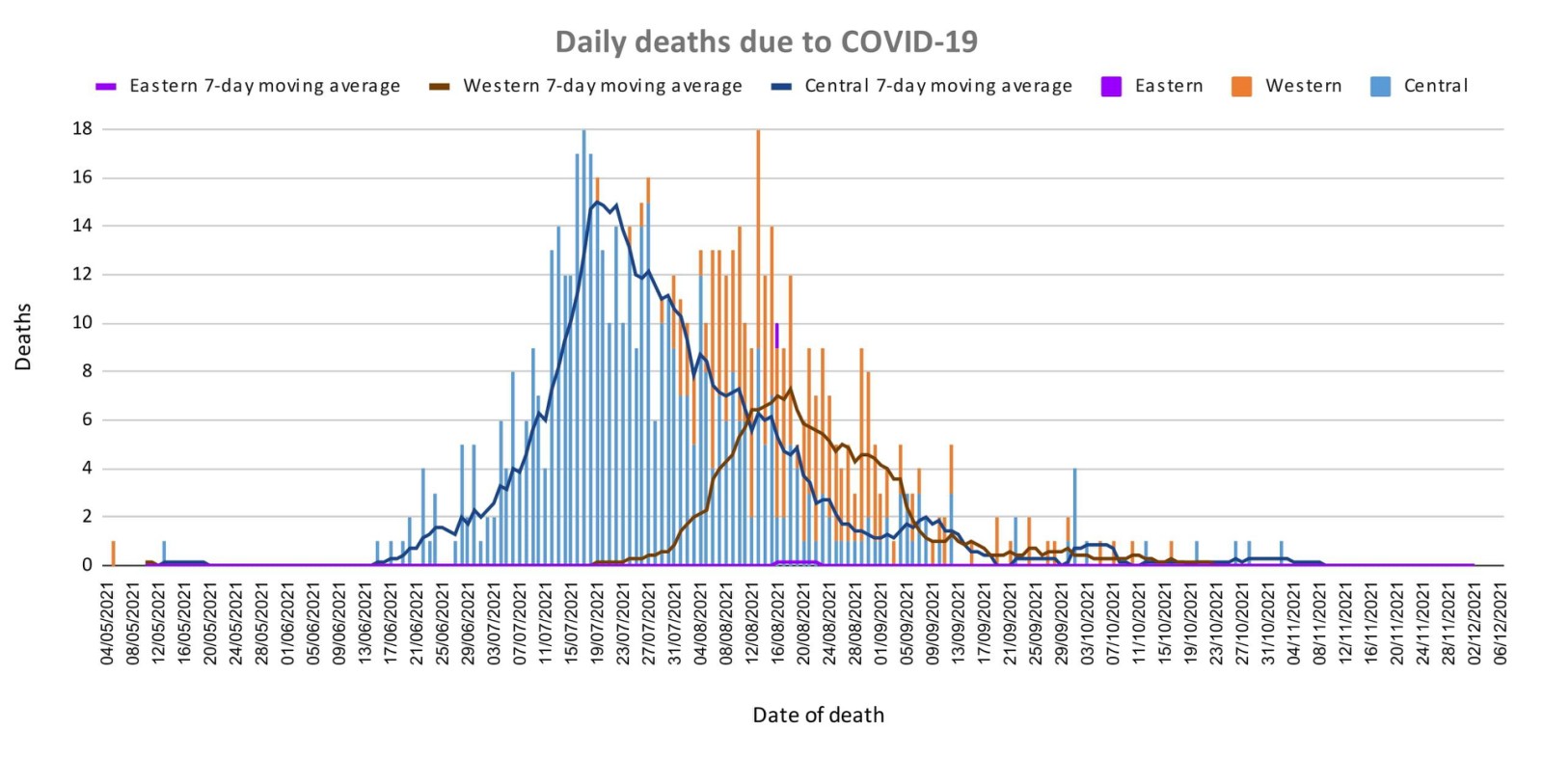
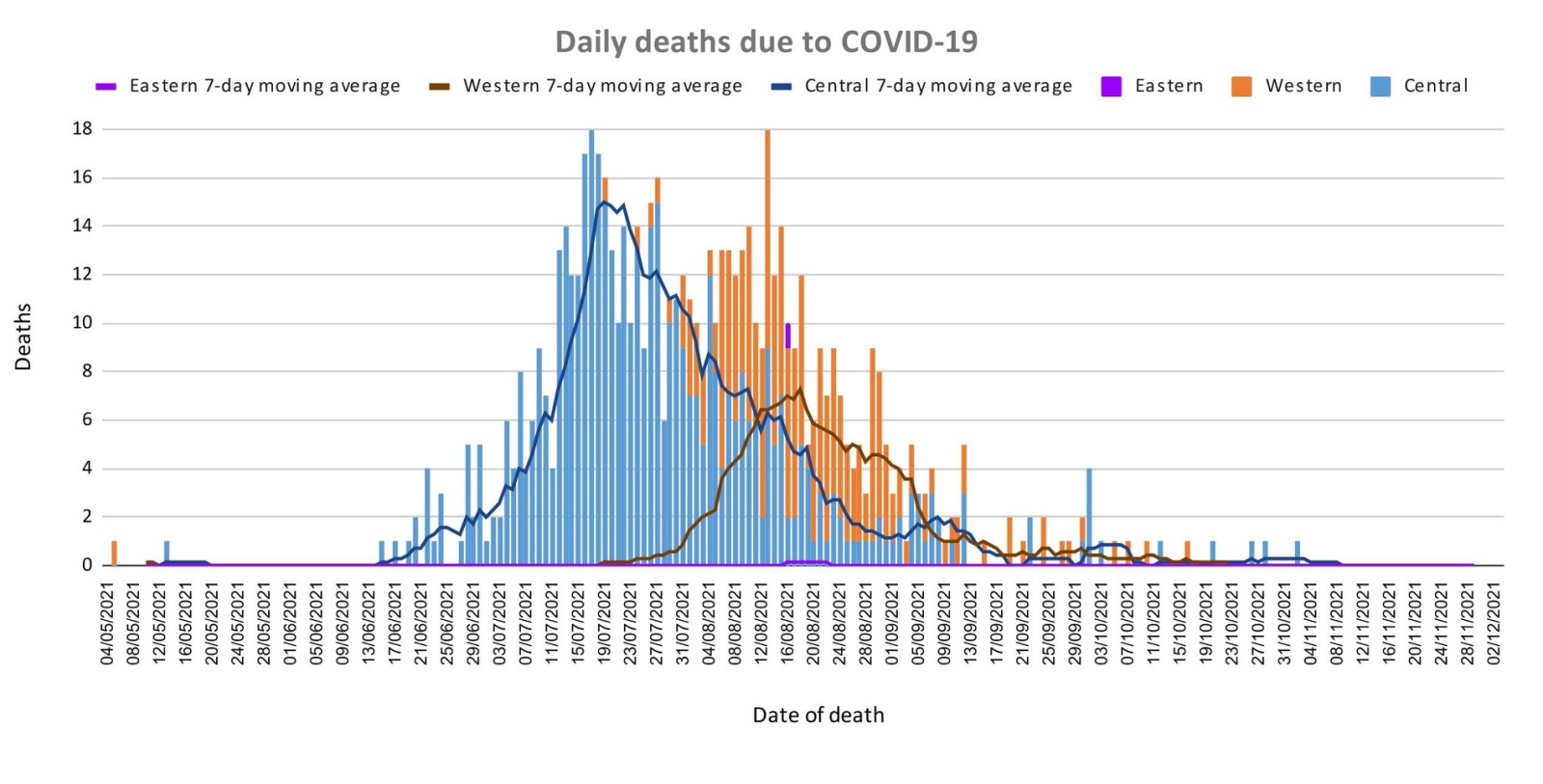
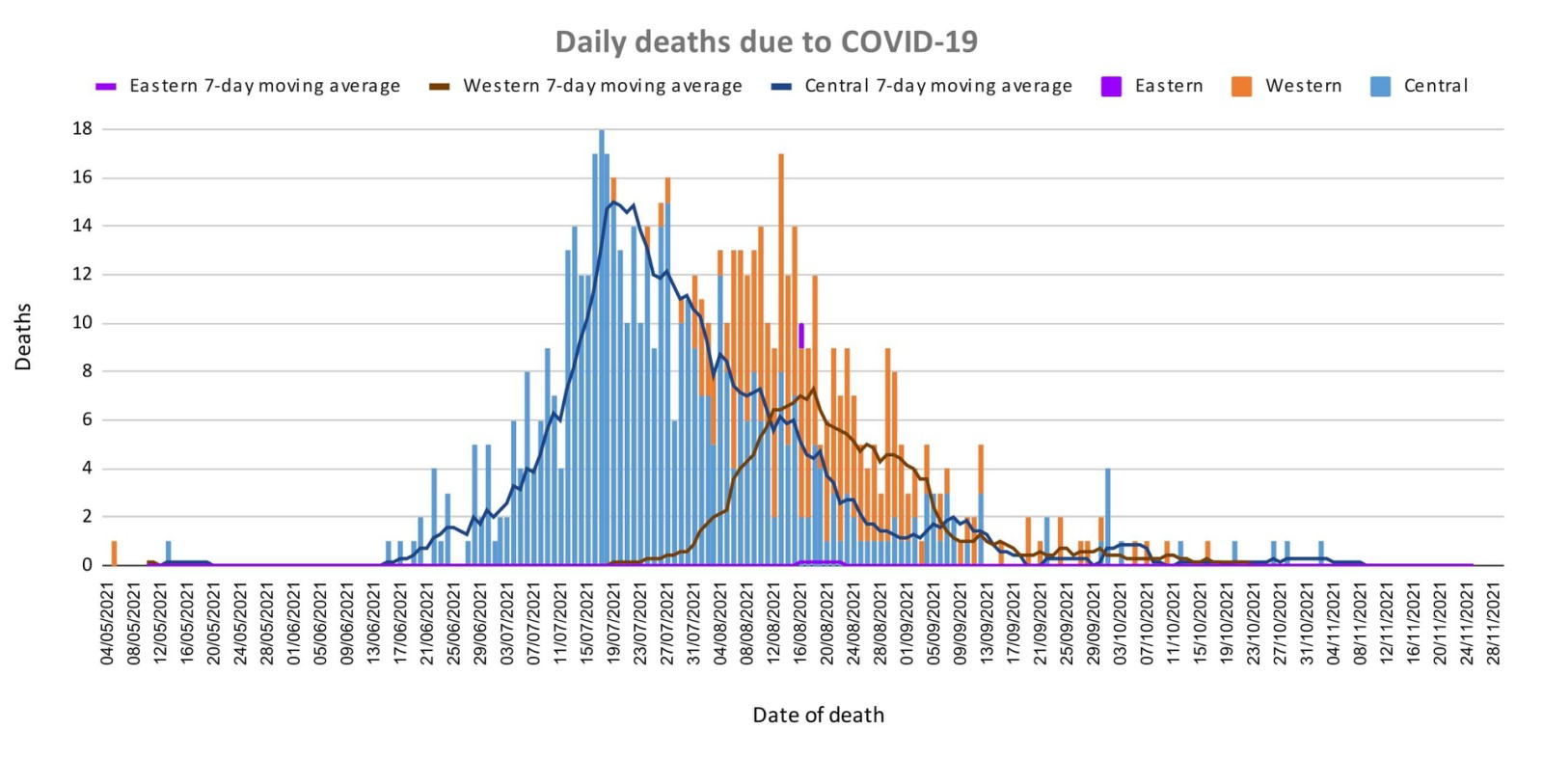
This curve depicts the daily death count by division since the 2nd wave of this outbreak that began in April 2021. Overall, the death rate graphs for the Central and Western Divisions indicate a declining trend. The differences between the Central and Western are similar to the incidence of the daily cases and are likely a reflection of vaccination levels, COVID mitigation measures, and differences in population density.

There is no COVID-19 death to report.

There have been a total of 697 deaths due to COVID-19 in Fiji, with 695 of these deaths during the outbreak that started in April this year. Please note that due to the time required by clinical teams to investigate, classify and report deaths, a 4-day interval is given to calculate the 7 days rolling average of deaths, based on the date of death, to help ensure the data collected is complete before the average is reported. Therefore, as of December 2nd, the national 7 days rolling average for COVID-19 deaths per day is 0.0, with a case fatality rate of 1.32%.

We have recorded 609 COVID-19 positive patients who died from serious medical conditions they had before they contracted COVID-19; these are not classified as COVID-19 deaths.

Epidemic Outlook:

The Ministry of Health continues to monitor the outbreak using indicators such as daily case numbers, hospitalizations, test positivity, and deaths.

Occupancy rates in health facilities, the occupancy rate of ICU beds, death rates, and vaccination coverage are indicators to monitor our health response capacity and we see a decreasing trend across indicators from our health facilities with increasing vaccination coverage for adults and 15-17-year-olds in Fiji. With the commencement of vaccination for 12-14-year-olds, we expect their coverage to contribute to reducing the risk of severe disease, hospitalization, and death.

With international travel open, we anticipate our testing numbers to increase from international repatriates and travelers including Fijians visiting families and friends. With increasing COVID-19 cases in the European region and the emergence of the new variant Omicron, there is cause for concern. Our border health measures and surveillance will need to be strengthened and maintained. We anticipate continued surveillance and testing in our communities and maritime islands to monitor and detect cases for early intervention.

Public Advisory:

The Ministry of Health and Medical Services announced last week that travelers who had arrived from an African state and were undergoing quarantine in a border quarantine facility had tested positive for COVID-19. Their samples had been sent to the reference laboratory in Australia for urgent genomic sequencing. The results for the two travelers have been received and are confirmed positive for the Omicron variant.

The two travelers are Fijian citizens who had traveled back into Fiji from Nigeria, arriving on Fiji Airways flight FJ1392 from Hong Kong on November 25th – the day the discovery of the Omicron variant was announced internationally. Both travelers tested negative for COVID-19 before departure from Fiji and before they left Nigeria. They entered a government-designated border quarantine facility immediately upon arrival into Fiji, tested positive while in quarantine, currently have no symptoms, and were fully vaccinated. With the exception of four passengers, all those on the flight were from non-travel partner countries, and therefore entered a border quarantine facility upon arrival to undergo the full quarantine protocol of 10 days. That has since been extended to 14 days. The four passengers on the flight who were from a travel partner country have tested negative. The Fiji Airways crew and accompanying passengers from FJ 1392 have tested negative at least twice.

The indications are that we have averted community transmission at this time, and the measures we had put in place to prevent, or at least delay, community transmission through the importation of cases from red zone countries have worked well so far. Our red zone designated countries are countries that we consider at high risk of proliferating variants. These are countries with low vaccination rates, poor testing data, and an ongoing outbreak.  As we previously highlighted, the protocols in place for the red zone countries were to isolate for 5 days and test negative twice before we approve their re-entry. In Fiji, they undergo 14 days of strict quarantine and testing in a government-designated border quarantine facility.

The evidence on Omicron variant’s impact on the transmissibility of the virus, severity of disease, and effect of prior immunity (from vaccination or infection) is still in the very early stages so conclusions cannot be made yet. However, the preliminary evidence is that this variant may be more transmissible than the Delta variant; it may cause reinfection in people who have been previously infected with another variant; and it has been seen to infect people who are fully vaccinated – although, so far, the fully vaccinated cases have been generally mild or with no symptoms.

Therefore, it must be re-emphasized that, if a variant is transmissible enough, stringent border and community measures will only delay the inevitable entry and spread of current and future variants of the COVID-19 virus, especially as the Omicron variant is also spreading into some of our travel partner countries. To protect ourselves, our loved ones, and our country, we must all get vaccinated when it is our turn. And even with our high vaccination levels, we must maintain COVID safe habits: mask wisely by carrying a well-fitted mask when you leave your home and wear the mask properly in public indoor spaces, public service vehicles, and outdoor crowded spaces; open windows to improve ventilation; avoid poorly ventilated or crowded spaces; 2-meter physical distancing and ensure you are wearing a mask if you cannot maintain distance; cough or sneeze into a bent elbow or tissue, wash your hands frequently with soap and water or an alcohol-based hand sanitizer.

Finding the Omicron variant in travelers in border quarantine is not unexpected, given how quickly it has spread worldwide, but it is a sharp reminder to ourselves that the key to avoiding future restrictions and lockdowns is for us all to remain cautious about how we engage in the greater freedom we will enjoy. Whilst the easing of restrictions is needed to facilitate livelihoods, we must ensure that together with vaccination, we continue to observe our COVID safe measures and avoid contained spaces and crowds.

The Permanent Secretary for Health and Medical Services is also extremely concerned at the lack of adherence to COVID safe measures in gatherings throughout the country, especially the adherence to masking in indoor public spaces. After the Delta outbreak this year it is understandable that many will feel the urge to relax and celebrate now that case numbers are low, especially during the festive season. And many of us have let our guards slip.  We are all human. But this must stop now if we hope to reduce the impact of the impending third wave of COVID-19 expected early in 2022.

I hope that we will all take this advice to heart and do what is right, but I have also requested all spotters from Health, Commerce, and Security Ministries to escalate the fining of individuals and corporate bodies where there is evidence of non-compliance with COVID safe measures. These spot fines must be seen as a means to promote COVID safe measures; as such, it is NOT the intention that every single transgression will be picked up and fined. All of us who live in Fiji need to understand that any large resurgence in cases is likely to undermine our social and economic recovery program, irrespective of whether it’s from the Delta variant or the entry of the Omicron variant. We now need to maintain our COVID guard and ensure we protect ourselves at all times. Our mantra for “Onwards Fiji” (Toso Viti) is to protect yourself to protect Fiji.
COVID-19 Update 03-12-2021

COVID-19 Situation Update

Friday 03rd December

Transmission Update:

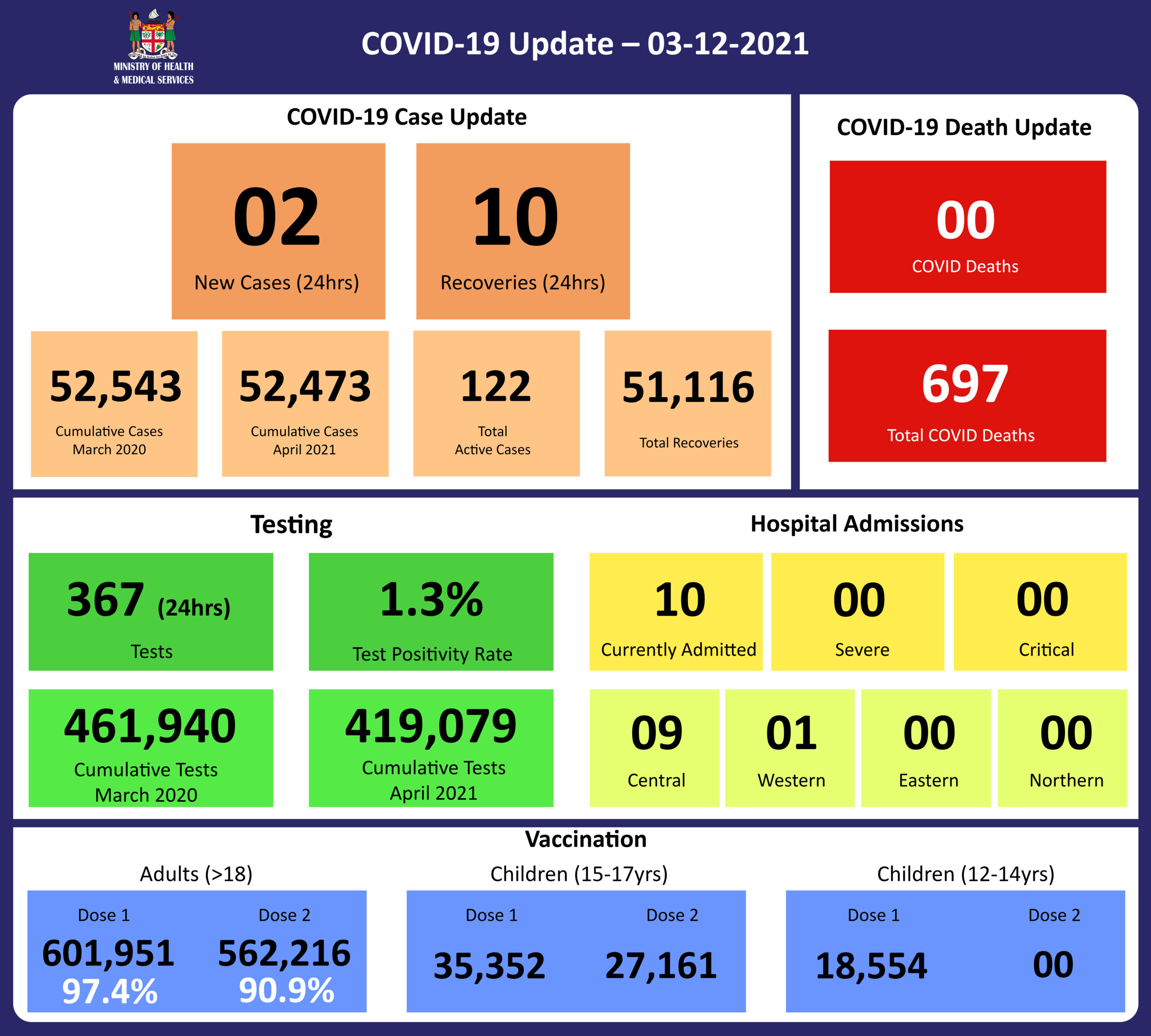
Since the last update, we have recorded a total of 11 new cases; of which 9 new cases were recorded on 02/12/2021, and 2 new cases in the last 24 hours ending at 8 am this morning.

This epidemic curve depicts the daily positive cases since the 2nd wave of this outbreak that began in April 2021. Overall for this 2nd wave, there have been 52,473 cases recorded, with 71% of the cases from the Central Division, 28% of the cases from the Western Division, and 1% of the cases from the Eastern and Northern Divisions. 

Our National 7- day rolling average is 7 daily cases calculated for 29th November 2021.

Deaths:

This curve depicts the daily death count by division since the 2nd wave of this outbreak that began in April 2021. Overall, the death rate graphs for the Central and Western Divisions indicate a declining trend. The differences between the Central and Western are similar to the incidence of the daily cases and are likely a reflection of vaccination levels, COVID mitigation measures, and differences in population density.

There is no COVID-19 death to report.

There have been a total of 697 deaths due to COVID-19 in Fiji, with 695 of these deaths during the outbreak that started in April this year. Please note that due to the time required by clinical teams to investigate, classify and report deaths, a 4-day interval is given to calculate the 7 days rolling average of deaths, based on the date of death, to help ensure the data collected is complete before the average is reported. Therefore, as of November 29, the national 7 days rolling average for COVID-19 deaths per day is 0.0, with a case fatality rate of 1.32%.

We have recorded 606 COVID-19 positive patients who died from serious medical conditions they had before they contracted COVID-19; these are not classified as COVID-19 deaths.

Epidemic Outlook:

The Ministry of Health continues to monitor the outbreak using indicators such as daily case numbers, hospitalizations, test positivity, and deaths.

Occupancy rates in health facilities, the occupancy rate of ICU beds, death rates, and vaccination coverage are indicators to monitor our health response capacity and we see a decreasing trend across indicators from our health facilities with increasing vaccination coverage for adults and 15-17-year-olds in Fiji. With the commencement of vaccination for 12-14-year-olds, we expect their coverage to contribute to reducing the risk of severe disease, hospitalization, and death.

With international travel open, we anticipate our testing numbers to increase from international repatriates and travelers including Fijians visiting families and friends. With increasing COVID-19 cases in the European region and the emergence of the new variant Omicron, there is cause for concern. Our border health measures and surveillance will need to be strengthened and maintained. We anticipate continued surveillance and testing in our communities and maritime islands to monitor and detect cases for early intervention.

Public Advisory:

Opening Borders and Variants

Today Fiji opened our international air travel borders to fully vaccinated COVID-tested travelers.

The reports about the new variant continue with new evidence that OMICRON had already achieved global spread well before it was reported by South African scientists, establishing itself in some European countries. These are countries that have the ability to check for the variant while other countries do not have genetic sequencing and cannot confirm cases of the variant at this time.

In Fiji, we currently have COVID-positive travelers in quarantine who arrived in the country from African states before we knew about OMICRON. They have been quarantined in line with the stringent measures we apply to countries we consider a red zone for ongoing viral spread. Their specimens have been received by our partner laboratory in Australia and genetic sequencing is ongoing.

If transmissible enough, stringent border and community measures will only delay the inevitable entry and spread of current and future variants of the COVID 19 Virus. Fiji citizens will only be safe if we remain COVID safe with 2-meter physical distancing; mask wisely by carrying a mask when you are out of your home and wear the mask properly in public indoor spaces, public service vehicles, and outdoor crowded spaces; open windows to improve ventilation; avoid poorly ventilated or crowded spaces; keep hands clean; cough or sneeze into a bent elbow or tissue; and get vaccinated when it’s your turn. This message is more important than all the stringent public health community and border measures.

Community Engagement and Community Based Surveillance Training

The risk communications and community engagement team under the COVID-19 Incident Management Unit is currently rolling out community engagement training with community health workers, turaga-ni-koro, mata-ni-tikina, church leaders, school managers, headteachers, and principals in rural areas throughout Fiji. The outcome of this training is COVID-19 preparedness, equipping local communities with the knowledge to carry out community-based surveillance, care pathways for COVID-19 cases and COVID-19 safe measures as the country opens its international and national borders and families reunite for the festive season across the country. We are mindful of the rainy season and the threat of cyclones. Furthermore, we usually expect cases of Leptospirosis, Typhoid, Dysentery, and Flu during this time.

A key message we want participants to promote is that family and community gatherings may result in a laxity of COVID-19 measures and that it is their duty as community leaders to ensure that all members of the community understand the reasons behind the COVID-19 safe measures and that each and every person plays their part in keeping their families and communities safe. It is important that COVID-19 preparedness is incorporated into the community action plans that address village development including disaster preparedness.  The community engagement is rolled out with support from the Ministry of iTaukei Affairs for the participation of the Roko Tui, the Assistant Roko Tui’s and the Turaga ni Koro and the Ministry of Rural and Maritime Development through the Commissioner’s Office for the participation of the District Officer and District Advisory Councilors.

Maritime Islands Travel

We are greatly encouraged that the pockets of red zone areas with less than 60% vaccination coverage in areas of Vanua Levu and the Maritime Zones have greatly reduced.

Acknowledging the efforts of medical teams in the north and the maritime divisions and the positive response from the public to come forward, a considerable number of individuals in low coverage areas have received their second dose. The decrease in the number of low coverage areas in the north and maritime islands means vaccination coverage rates in these areas have improved, contributing to increased protection of communities throughout the country.  Therefore, as of Saturday 04th December 2021, the capacity of vessels to Vanua Levu and the maritime islands will now be increased to 80%

Shipping companies are also reminded of their responsibility to maintain COVID-19 procedures, pre-boarding, during travel, and upon disembarkation at the destination. Our border health teams will continue to monitor the oversight provided by the shipping companies and ensure that COVID-19 safety measures are followed and travel guidelines are adhered to.

The public is also reminded to adhere strictly to COVID-19 safe measures of appropriate masking, especially in indoor public spaces, covering our coughs and sneezes, washing our hands regularly with soap and water, or using a hand sanitizer and maintaining a safe physical distancing of 2 meters to mitigate the risks of community transmission.

COVID-19 Vaccination Registration

25 November 2021

Public Advisory

COVID-19 Vaccination Registration for Fijian Residents Vaccinated Abroad

Individuals who are Fijian Citizens or Fiji Permit Holders and have received their COVID-19 vaccination in another country apart from Fiji, can now register their vaccination details in the Fijian Government Digital Vaccination Registry System.

An individual can register at https://vra.digitalfiji.gov.fj// under the international vaccination registration category. To register, an individual must have:

  • A valid vaccination reference number (if any dose of the COVID-19 vaccine was received in Fiji)
  • Birth Registration Number/Citizenship Number
  • A valid photo identification – Joint FNPF/FRCA, driver’s license, passport, student ID, or FNPF card.
  • A scanned copy of the valid vaccination card/certificate as proof of vaccination is the official document of the country where the individual was vaccinated.

For any queries, email: regvaxinternational@gmail.com

To learn more about registering into the International Vaccination Registry, go to:

The verification of the registration and an individual’s vaccination status will be completed within 3-5 days.

Registration Guideline

COVID-19 Update – 01-12-2021

Transmission Update:

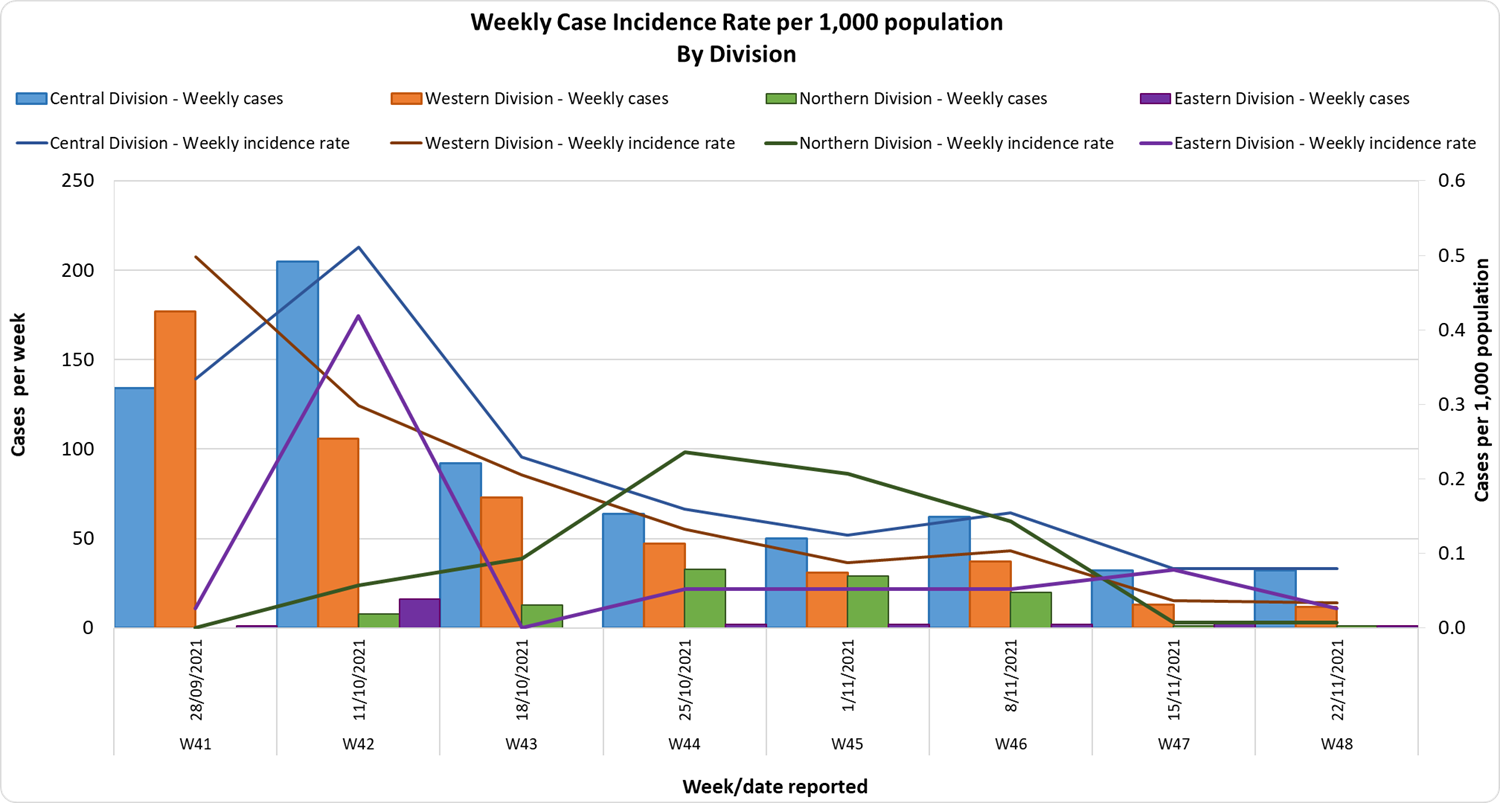
In the past 7 days, 19 cases were recorded in the Central division, 5 new cases in the Western division, 1 new case in the Eastern Division, and 1 new case in the Northern Division. The Central Division cases constitute 71% of the cumulative total cases nationally, with the Western division making up 28% and 1% in the Northern and Eastern Divisions.

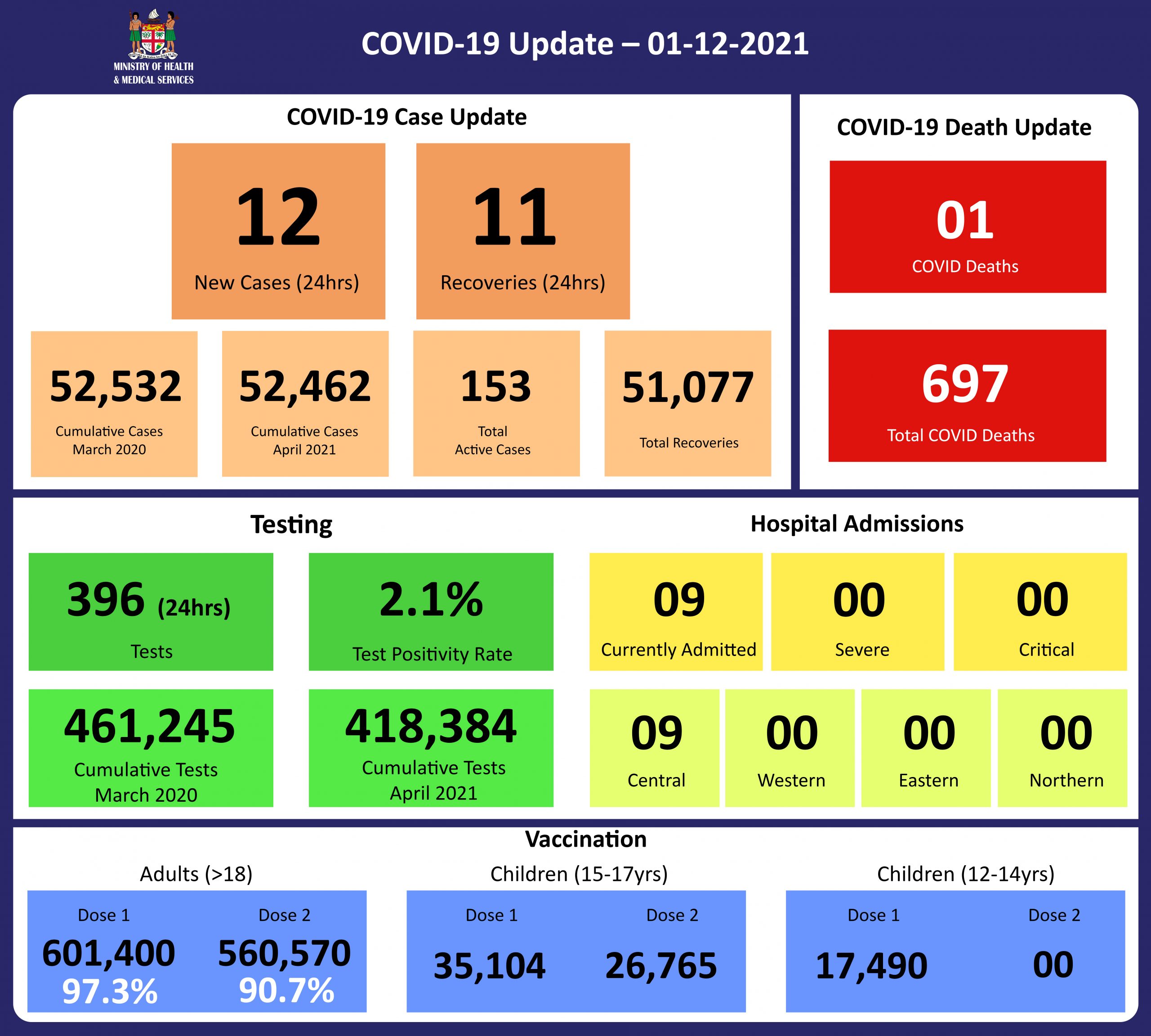
Since the last update, we have recorded 14 new cases of which nil new cases were recorded on 30/11/2021 and 12 new cases in the last 24 hours ending at 8 am this morning.

The national 7-day rolling average of cases as of 27th November is 7 daily cases.

The weekly incidence rate graph by division indicates a continually declining trend. Furthermore, the peak weekly incidence in the western division was approximately a third of that in the central division, and the cumulative case numbers are also reflecting a similar difference.

Deaths:

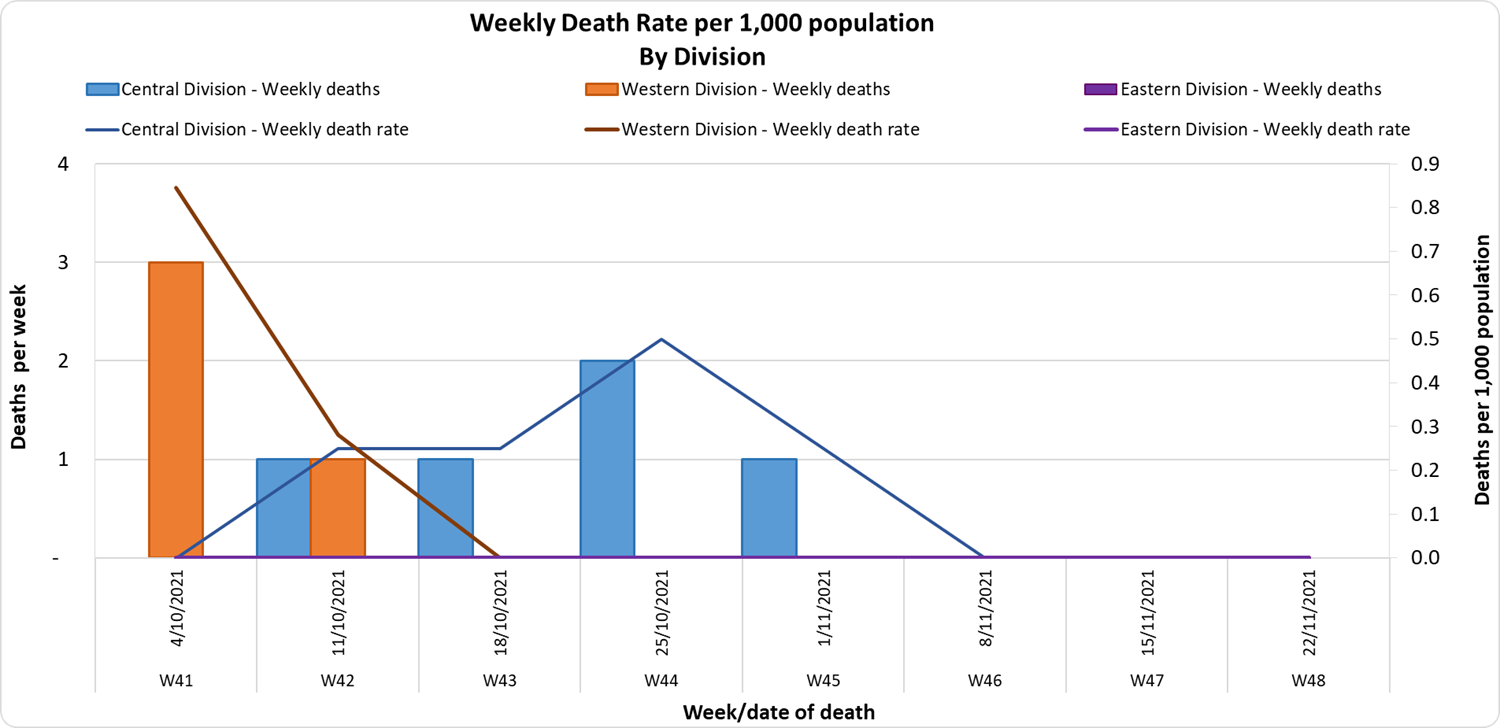
This curve depicts the weekly death rate per 1000 population by divisions since October 2021. Overall, the death rate graphs for the Central and Western Divisions indicate a declining trend. The differences between the Central and Western are similar to the incidence of the weekly cases and are likely a reflection of vaccination levels, COVID mitigation measures, and differences in population density.

There is one COVID-19 death to report.

The COVID-19 death to report is of a 67-year-old female from the Central Division who died at home on 13/08/2021. She was not vaccinated. This is reported today due to a delay in the issuance of the death certificate.

There have been 697 deaths due to COVID-19 in Fiji, with 695 of these deaths during the outbreak that started in April this year. Please note that due to the time required by clinical teams to investigate, classify and report deaths, a 4-day interval is given to calculate the 7 days rolling average of deaths, based on the date of death, to help ensure the data collected is complete before the average is reported. Therefore, as of November 27th, the national 7 days rolling average for COVID-19 deaths per day is 0.0, with a case fatality rate of 1.32%.

We have recorded 605 COVID-19 positive patients who died from serious medical conditions they had before they contracted COVID-19; these are not classified as COVID-19 deaths.

Hospitalisation:

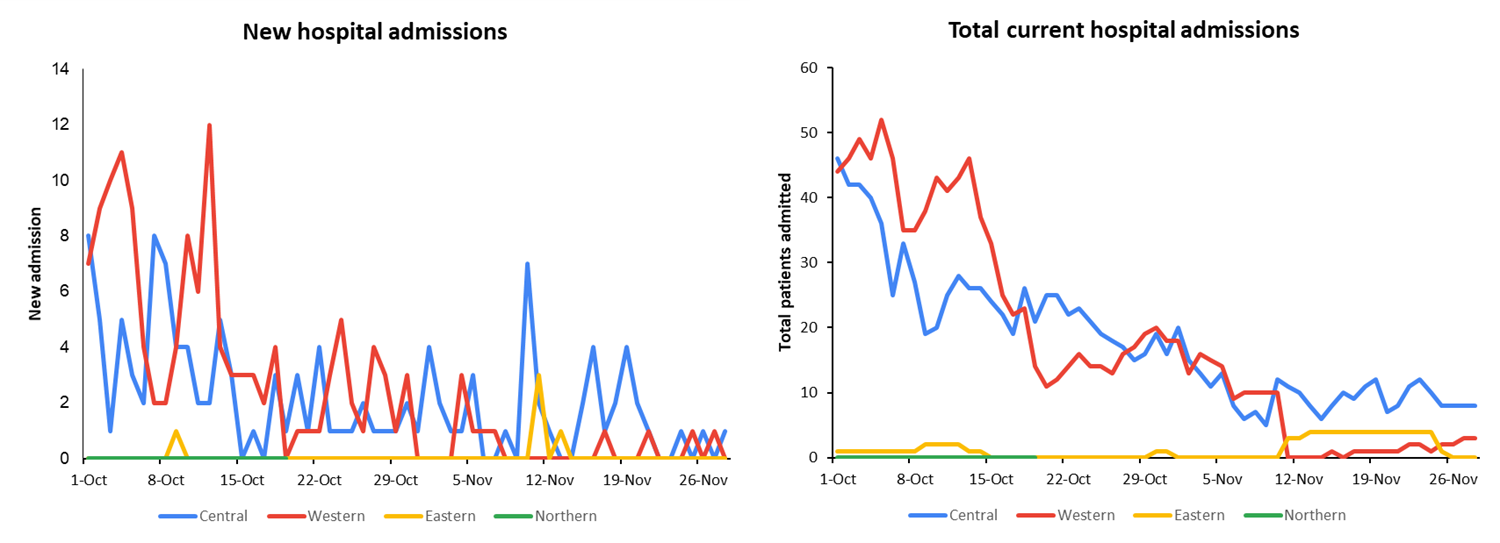
The downward trend in both the new hospital admissions and total admissions in all hospitals admitting COVID-19 patients across the country is consistent with the cases and death trends. The hospital admissions continue on a downward trend indicating a sustained positive response to COVID mitigation measures, Population density differences, and differential Vaccination rates.

Testing:

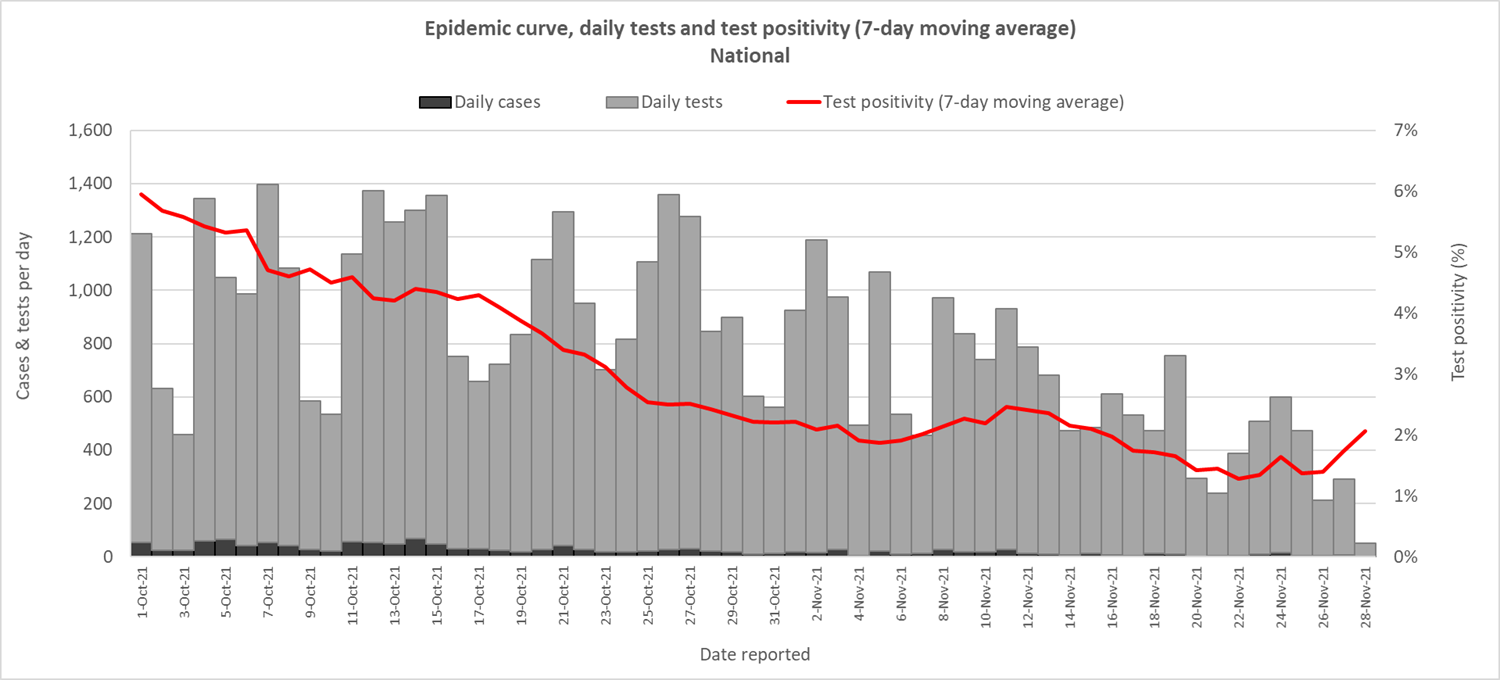
344 tests have been reported for November 23rd, 2021. The 7-day daily test average is 395 tests per day or 0.4 tests per 1,000 population.

The national 7-day average daily test positivity is 2%, which is below the WHO recommendation of 5%, and this is illustrated by the lab testing graph. Though we continue testing in high-risk areas, our case numbers and test positivity rate indicate a better control of the community transmission in Fiji through the combined efforts of containment and mitigation measures with ongoing community surveillance.

Epidemic Outlook:

The Ministry of Health continues to monitor the outbreak using indicators such as daily case numbers, hospitalizations, test positivity, and deaths.

Occupancy rates in health facilities, the occupancy rate of ICU beds, death rates, and vaccination coverage are indicators to monitor our health response capacity and we see a decreasing trend across indicators from our health facilities with increasing vaccination coverage for adults and 15-17-year-olds in Fiji. With the commencement of vaccination for 12-14-year-olds, we expect their coverage to contribute to reducing the risk of severe disease, hospitalization, and death.

With borders opening today, we anticipate our testing numbers to increase from international repatriates and travelers including Fijians visiting families and friends. With increasing COVID-19 cases in the European region, and the emergence of the new variant of concern; B.1.1.529, named Omicron, noted to have several mutations, is a cause for concern. Our border health measures and surveillance will need to be strengthened and maintained.

Our weekly testing numbers of over 4,000 are still above the WHO recommended rate of 4 tests per 1,000 population per week (or approx. 3,500 tests per week) and we anticipate continued surveillance and testing in our communities and maritime islands to monitor and detect cases for early intervention.

Public Advisory:

Opening Borders and Variants

Today Fiji opened our international air travel borders to fully vaccinated COVID-tested travelers.

The reports about the new variant continue with new evidence that OMICRON had already achieved global spread well before it was reported by South African scientists, establishing itself in some European countries. These are countries that have the ability to check for the variant while other countries do not have genetic sequencing and cannot confirm cases of the variant at this time.

In Fiji, we currently have COVID-positive travelers in quarantine who arrived in the country from African states before we knew about OMICRON. They have been quarantined in line with the stringent measures we apply to countries we consider a red zone for ongoing viral spread. Their specimens will be forwarded this week overseas for genetic sequencing.

If transmissible enough, stringent border and community measures will only delay the inevitable entry and spread of current and future variants of the COVID 19 Virus. Fiji citizens will only be safe if we remain COVID safe with 2-meter physical distancing; mask wisely by carrying a mask when you are out of your home and wear the mask properly in public indoor spaces, public service vehicles, and outdoor crowded spaces; open windows to improve ventilation; avoid poorly ventilated or crowded spaces; keep hands clean; cough or sneeze into a bent elbow or tissue; and get vaccinated when it’s your turn. This message is more important than all the stringent public health community and border measures.

The Ministry of Health and Medical Services is continuing to improve public health and medical capacities to manage an increase in cases. As such the remodeling of the health service provision will continue its current focus on:

  1. Community surveillance through test trace and track protocols is being escalated to help us identify and contain any outbreak early.
  2. Registration and line listing of vulnerable persons especially in poorly vaccinated areas has been done;
  3. Preparations for the monitoring of positive cases and vulnerable persons to ensure better access to appropriate care plans has been made;
  4. Clinical care protocols for the severe disease has been reviewed and strengthened;

Supporting School Re-opening

As international travel starts we also need to start looking at schools opening. While COVID-19 poses a lower risk to children we know that secondary transmission from young school-age children can and does occur in both household and school settings. The Ministry of Health and Medical Services is concerned about the adverse impact that school closure is causing to the mental and physical health of our children, and also to our medical programs in schools. Whilst our vaccination program of children is ongoing, it is important that we appreciate that all our community-based COVID safe measures are the key to ensuring the safe return of our children to school. In much the same way that we need to be COVID safe to help keep our borders open we also need to be COVID safe to help open our schools and keep them open.

Community Engagement and Community Based Surveillance Training

The risk communications and community engagement team under the COVID-19 Incident Management Unit is currently rolling out community engagement training with community health workers, turaga-ni-koro, mata-ni-tikina, church leaders, school managers, headteachers, and principals in rural areas throughout Fiji. The outcome of this training is COVID-19 preparedness, equipping local communities with the knowledge to carry out community-based surveillance, care pathways for COVID-19 cases and COVID-19 safe measures as the country opens its international and national borders and families reunite for the festive season across the country. We are mindful of the rainy season and the threat of cyclones. Furthermore, we usually expect cases of Leptospirosis, Typhoid, Dysentery, and Flu during this time.

Using COVID-19 surveillance guidelines developed by the Fiji CDC, the community engagement roll-out provides guidance for local community leaders to recognize and identify COVID-19 and other infectious diseases, signs, and symptoms and ensure the health and medical authorities are informed in a timely manner and able to respond appropriately cases that may develop in the community.

A key message we want participants to promote is that family and community gatherings may result in a laxity of COVID-19 measures and that it is their duty as community leaders to ensure that all members of the community understand the reasons behind the COVID-19 safe measures and that each and every person plays their part in keeping their families and communities safe. It is important that COVID-19 preparedness is incorporated into the community action plans that address village development including disaster preparedness.  The community engagement is rolled out with support from the Ministry of iTaukei Affairs for the participation of the Roko Tui, the Assistant Roko Tui’s and the Turaga ni Koro and the Ministry of Rural and Maritime Development through the Commissioner’s Office for the participation of the District Officer and District Advisory Councilors.

COVID-19 Update 29-11-2021

COVID-19 Situation Update

Monday 29th November

Transmission Update:

Since the last update, we have recorded a total of 12 new cases; of which 4 new cases were recorded on 27/11/2021, 8 new cases were recorded on 28/11/2021, and nil new cases in the last 24 hours ending at 8 am this morning.

This epidemic curve depicts the daily positive cases since the 2nd wave of this outbreak that began in April 2021. Overall, for this 2nd wave, there have been 52,436 cases recorded, with 71% of the cases from the Central Division, 28% of the cases from the Western Division, and 1% of the cases from the Eastern and Northern Division. 

Our National 7- day rolling average is 7 daily cases calculated for 25th November 2021.

Deaths:

This curve depicts the daily death count by division since the 2nd wave of this outbreak began in April 2021. Overall, the death rate graphs for the Central and Western Divisions indicate a declining trend. The differences between the Central and Western are similar to the incidence of the daily cases and are likely a reflection of vaccination levels, COVID mitigation measures, and differences in population density.

There is no COVID-19 death to report

There have been a total of 696 deaths due to COVID-19 in Fiji, with 694 of these deaths during the outbreak that started in April this year. Please note that due to the time required by clinical teams to investigate, classify and report deaths, a 4-day interval is given to calculate the 7 days rolling average of deaths, based on the date of death, to help ensure the data collected is complete before the average is reported. Therefore, as of November 25th, the national 7 days rolling average for COVID-19 deaths per day is 0.0, with a case fatality rate of 1.32%.

We have recorded 604 COVID-19 positive patients who died from serious medical conditions they had before they contracted COVID-19; these are not classified as COVID-19 deaths.

Epidemic Outlook:

The Ministry of Health continues to monitor the outbreak using indicators such as daily case numbers, hospitalizations, test positivity, and deaths.

Occupancy rates in health facilities, the occupancy rate of ICU beds, death rates, and vaccination coverage are indicators to monitor our health response capacity and we see a decreasing trend across indicators from our health facilities with increasing vaccination coverage for adults and 15-17-year-olds in Fiji. With the commencement of vaccination for 12-14-year-olds, we expect their coverage to contribute to reducing the risk of severe disease, hospitalization, and death.

With borders opening in the next two days, we anticipate our testing numbers to increase from international repatriates and travelers including Fijians visiting families and friends. With increasing COVID-19 cases in the European region, and the emergence of the new variant of concern; B.1.1.529, named Omicron, noted to have several mutations, is a cause for concern. Our border health measures and surveillance will need to be strengthened and maintained.

Our weekly testing numbers of over 4,000 are still above the WHO recommended rate of 4 tests per 1,000 population per week (or approx. 3,500 tests per week) and we anticipate continued surveillance and testing in our communities and maritime islands to monitor and detect cases for early intervention.

Public Advisory:

Omicron

The Ministry of Health and Medical Services has continued to review findings released by international experts on the Omicron variant of the COVID-19 virus. Based on advice from the World Health Organization released today, we note the following:

Transmissibility: It is not yet clear whether Omicron is more transmissible (e.g., more easily spread from person to person) compared to other variants, including Delta. There is some reported field evidence of increased transmissibility in South Africa however epidemiologic studies are underway to understand if it is because of Omicron or other factors. The public is advised that if indeed the virus is more transmissible than delta, then it will be inevitable that it gets to Fiji. In this instance the current steps we are taking do not change; we work on better positioning ourselves to deal with a third wave, irrespective of whether it is through Omicron or the current Delta variant that is endemic to Fiji.

Effectiveness of vaccines: While there is ongoing effort to understand the impact of this variant on vaccines, it is important to understand that vaccines remain critical to reducing severe disease and death, including against the dominant circulating variant, Delta. Current vaccines remain effective against severe disease and death. It should be noted that South African states are poorly vaccinated compared to Fiji, and all our COVID safe measures are proven to work in reducing transmission especially within a highly vaccinated population. We are continuing our efforts to vaccinate all our children 12 to 17 years and providing booster doses to front liners and vulnerable persons.

The severity of disease: There is preliminary data suggesting increased rates of hospitalization in South Africa, but this may be due to increasing overall numbers of people becoming infected, rather than a result of a specific infection with Omicron.  South Africa and the nearby region is a poorly vaccinated region and an increase in transmission of COVID 19, whatever the variant, will result in an increase in the number of hospitalization. Understanding the impact of the Omicron variant on disease severity, especially in the vulnerable, will take days to several weeks.

Effectiveness of prior SARS-CoV-2 infection: There are early data to suggest that people who have previously had COVID-19 could become re-infected more easily with Omicron, as compared to other variants of concern, but the information is limited. More information on this will become available in the coming days and weeks.

Effectiveness of current tests: The PCR tests used in Fiji continue to detect infection, including infection with Omicron. Concerns on the impact on other types of tests, including rapid antigen detection tests remain under study.

Effectiveness of current treatments:   Standard treatments (including Corticosteroids – Prednisone) that we have in Fiji will still be effective for managing patients with severe COVID-19.

We are being encouraged to continue to implement effective public health measures to reduce COVID-19 circulation overall, using risk analysis and a science-based approach. The Ministry of Health and Medical Services is continuing to improve public health and medical capacities to manage an increase in cases. As such the remodeling of the health service provision will continue its current focus on:

  1. Community surveillance through test trace and track protocols is being escalated to help us identify and contain any outbreak early.
  2. Registration and line listing of vulnerable persons especially in poorly vaccinated areas has been done;
  3. Preparations for the monitoring of positive cases and vulnerable persons to ensure better access to appropriate care plans has been made;
  4. Clinical care protocols for the severe disease has been reviewed and strengthened;

This new variant is a reminder that for as long as there is a pandemic, Fiji will continue to face a threat from the virus and its variants. If transmissible enough, stringent border and community measures will only delay the inevitable entry and spread of current and future variants of the COVID 19 Virus. Fiji citizens will only be safe if we remain COVID-safe with 2-meter physical distancing; mask wisely by carrying a mask when you out of your home and wear the mask properly in public indoor spaces, public service vehicles, and outdoor crowded spaces; open windows to improve ventilation; avoid poorly ventilated or crowded spaces; keep hands clean; cough or sneeze into a bent elbow or tissue, and get vaccinated when it’s your turn.

Supporting School Re-opening

COVID-19 poses a lower risk to children however secondary transmission from young school-age children can and does occur in both household and school settings. Whilst our vaccination program of children is ongoing, it is important that we appreciate that all our community-based COVID safe measures are important measures to ensure the safe return of our children to school. The Ministry of Health and Medical Services is concerned about the adverse impact that school closure is causing to the mental and physical health of our children, and also to our medical programs in schools. In much the same way that we need to be COVID safe to help keep our borders open we also need to be COVID safe to help open our schools and keep them open.