
PUBLIC ADVISORY #39 | 18 September 2026.
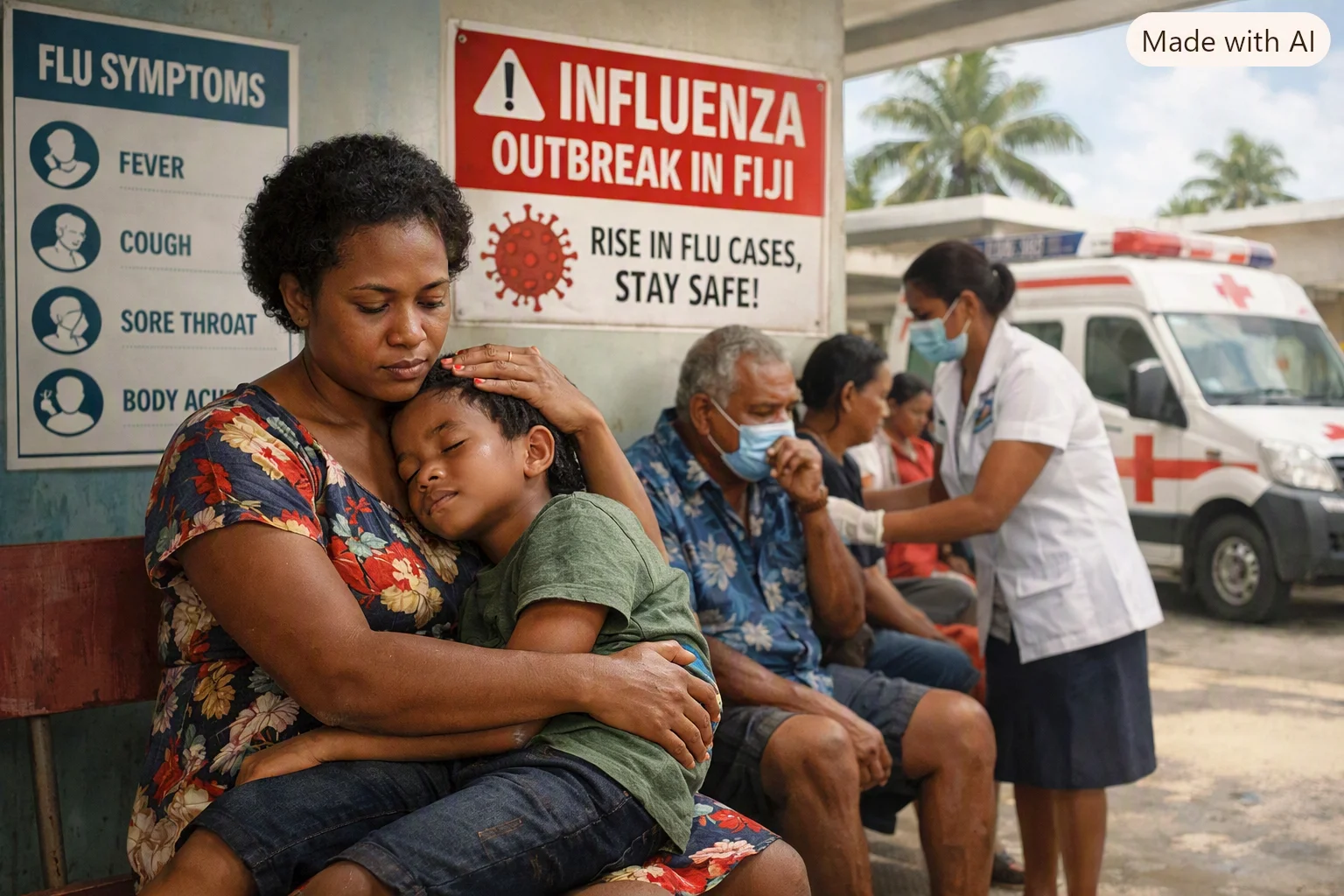
The Ministry of Health & Medical Services is urging the public to take extra health precautions following a sharp increase in flu cases across the country.
The latest respiratory health report, covering the first nine months of the year (January to September 2026), shows that sickness from flu-like viruses is rising quickly.
In the first week of September alone, health centers recorded 1,780 new cases of influenza-like illness (ILI). This is a massive 75 percent jump in sickness compared to just the week before.
Health data shows that the Central Division is currently the hardest-hit area in Fiji, recording the highest number of flu cases with 975 patients seeking care in a single week.
The Northern Division followed with 398 cases, while the Western Division recorded 362 cases.
The report also reveals that children under 5 years old are the most affected age group.
This young group makes up 30 percent of all flu-like cases nationwide.
In the Northern Division, young children accounted for 30 percent of the local cases, while in the Central Division, they made up 24 percent.
Laboratory tests from January to September confirm that a specific flu strain, Influenza A (H1pdm09), is the main virus causing the current outbreak.
Furthermore, an online public health tracker called FluTracking showed that the number of everyday citizens reporting both a cough and a fever spiked from 10.2 percent to 16.4 percent in one week.
What is the Flu?
The flu (influenza) is a contagious respiratory illness caused by viruses. While it can feel like a common cold, the flu is much more serious. It can lead to severe lung infections like pneumonia, especially for vulnerable groups:
- Babies and young children;
- Adults over 60 years old;
- Pregnant women;
- People with medical conditions (like diabetes, asthma, heart, or kidney disease);
- Smokers and individuals with obesity;
Common Symptoms
Most people recover in 7 to 10 days. Typical symptoms include:
- Fever, headache, and body aches
- Cough and sore throat
- Runny or stuffed nose and sneezing
- Extreme tiredness (fatigue)
- Vomiting and diarrhoea (mostly in children)
Seek emergency medical care immediately if you experience difficulty breathing, chest pain, severe vomiting, confusion, or severe drowsiness.
How to Protect Yourself and Others
The flu spreads through coughs, sneezes, and touching infected surfaces. Protect your community by following these steps:
- Wash hands often with soap and water or use hand sanitizer;
- Cover your mouth and nose with a tissue or your elbow when coughing or sneezing;
- Stay home if you are feeling sick;
- Wear a mask if you are sick and need to go out;
Caring for Sick Children at Home
1. Keep Them Hydrated
Fevers cause dehydration, which can be dangerous for babies.
- Encourage your child to drink plenty of water and fresh fruit juices (like lemon juice).
- If breastfeeding, offer shorter, more frequent feeds. You can also express milk and feed it from a cup if they refuse the breast.
- Watch for dehydration signs: Dry lips, no tears when crying, a sunken soft spot on the head, low energy, or fewer than 3–4 wet nappies in 24 hours. See a doctor immediately if you notice these.
When to Take Your Child to the Doctor
Take your child to a health centre immediately if they:
- Are under 3 months old and have a fever of 38°C or higher;
- Have a fever over 38°C for more than two days, or any fever reaching 40°C or higher;
- Have a fever that does not drop after consulting a healthcare provider regarding fever management;
- Are unusually drowsy, lethargic, or refuse to eat or drink;
- Are wheezing or struggling to breathe;
ENDS